2025年4月7日星期一

2020年3月23日星期一
A sandbar walk to remember
A sandbar walk to remember

Visitors are thrilled to take part in the sandbar walk. — Bernama
IT looked as if the sea parted as visitors to Pantai Tanjung Rhu in Langkawi, Kedah, leisurely walked along a 600m sandbar from the beach to nearby islands.
Tanjung Rhu Resort Langkawi senior resident naturalist Zoher Mustan said a sandbar would appear when there is low tide during a full moon.
“The sandbar phenomenon can only be observed once a year, ” he told Bernama last week.
Zoher said that besides Pantai Tanjung Rhu, two other beaches on the island, namely Teluk Datai and Pantai Cenang, had also become popular locations for the sandbar walk activity.
He said visitors also had the opportunity to see at close range various marine species such as clownfish, sea cucumber, moon crab, seahorse and horseshoe crab while walking along the sandbar.
Meanwhile, Langkawi Development Authority (Lada) chief executive officer Dr Hezri Adnan said that previously, the sandbar walk activity was only meant for Tanjung Rhu Resort Langkawi guests but this year, it was opened to a bigger crowd.
“Langkawi is famed for its beautiful landscapes.
“This programme is a joint effort by Lada, Tanjung Rhu Resort Langkawi and other strategic partners to highlight the beautiful natural environment to both domestic and foreign tourists, ” he said.

Hezri also expressed hope that the programme would become a popular annual event at the island. -– Bernama

Visitors stopping on the sandbar to admire the natural beauty of the surroundings. — Bernama
Visitors are thrilled to take part in the sandbar walk. — Bernama
IT looked as if the sea parted as visitors to Pantai Tanjung Rhu in Langkawi, Kedah, leisurely walked along a 600m sandbar from the beach to nearby islands.
Tanjung Rhu Resort Langkawi senior resident naturalist Zoher Mustan said a sandbar would appear when there is low tide during a full moon.
“The sandbar phenomenon can only be observed once a year, ” he told Bernama last week.
Zoher said that besides Pantai Tanjung Rhu, two other beaches on the island, namely Teluk Datai and Pantai Cenang, had also become popular locations for the sandbar walk activity.
He said visitors also had the opportunity to see at close range various marine species such as clownfish, sea cucumber, moon crab, seahorse and horseshoe crab while walking along the sandbar.
Meanwhile, Langkawi Development Authority (Lada) chief executive officer Dr Hezri Adnan said that previously, the sandbar walk activity was only meant for Tanjung Rhu Resort Langkawi guests but this year, it was opened to a bigger crowd.
“Langkawi is famed for its beautiful landscapes.
“This programme is a joint effort by Lada, Tanjung Rhu Resort Langkawi and other strategic partners to highlight the beautiful natural environment to both domestic and foreign tourists, ” he said.
Hezri also expressed hope that the programme would become a popular annual event at the island. -– Bernama
Visitors stopping on the sandbar to admire the natural beauty of the surroundings. — Bernama
2020年2月1日星期六
Pedu Lake offers rich diversity of flora and fauna
Pedu Lake offers rich diversity of flora and fauna
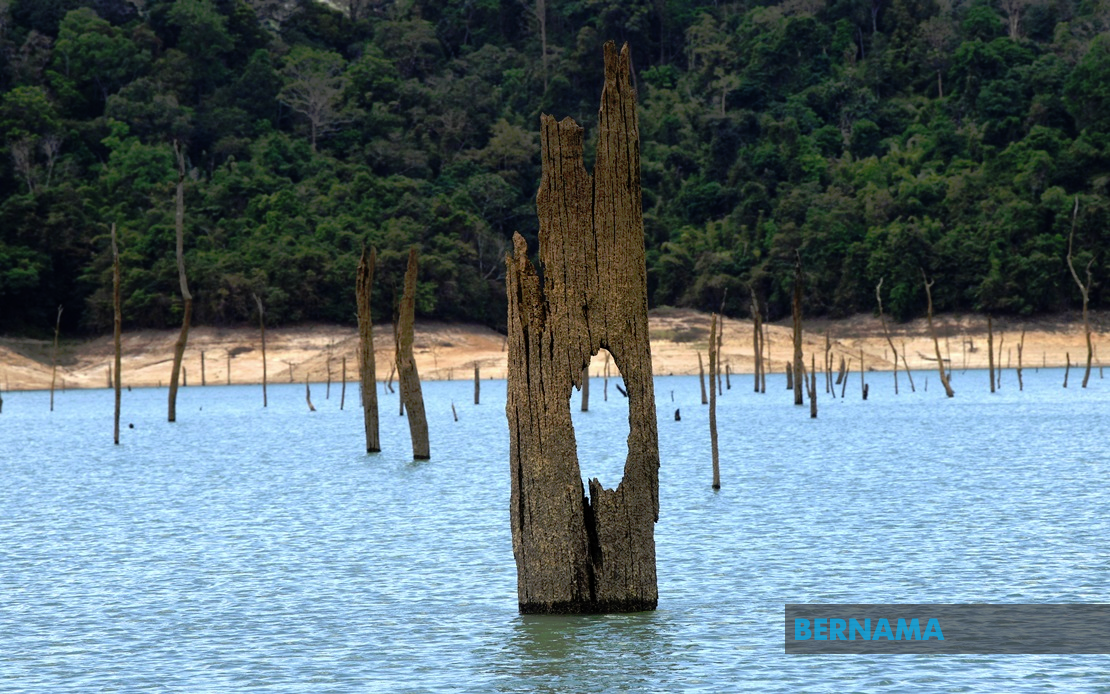
PADANG TERAP, Jan 31 -- Pedu Lake or Tasik Pedu as it is better known among the locals, is undoubtedly an under-the-radar destination, however, for those who are adventurous enough to stray off the beaten tracks, this place offers a rich diversity of flora and fauna to lucky visitors.
To make it even more exciting, visitors will have the opportunity to see wild animals, especially herds of elephants that often visited the salt licks around the Kedah’s largest man-made lake, which is located about 80 kilometres from Alor Setar.
Pedu Lake Eco and Services operation manager Amir Wahab said working on an ecotourism packages featuring a boat house concept has given him an added advantage as he could take visitors to a number of salt licks in the area to see wild animals within the safe distance.
“We really prioritise the safety of our visitors, as this place is surrounded by wild, expanse of rainforest jungle, so seeing wildlife from the boat house is much safer as they can watch the animals without any obstructions.
“Thus far, our visitors have had the opportunities to see herds of elephants, as well as other animals such as rusa (deer) and seladang (gaur or Indian bison), but personally I think watching a herd of elephants is more exciting,” he told Bernama here.
Amir said as the jungle surrounding the Pedu Lake creates a corridor for wild animals to cross into the Thailand jungle, the area often witnessed the presents of elephants at the salt licks particularly in May.
“Thus far, we have received an impressive number of tourists, over 1,300 arrivals throughout last year, including those from European countries. This is exciting for a destination like ours as it is not as popular as other major tourist destinations,” said Amir, a former employee of a resort at Pedu Lake which has since closed due to plummeting tourist arrivals .
Apart from wild animals, visitors can also get a glimpse of variety of tree species in the dense jungle surrounding the lake which are not found elsewhere.
“Here we have that famous Tualang tree which synonymous to high quality wild Tualang honey, which is usually harvested by the end of February,” he said.
He said visitors who stayed at his boat house would also be served a variety of local dishes from freshly-caught fish including ‘baung’, ‘lampam’, ‘tengalan’, and shrimp as well as of a type of mussels locally known as ‘kedaya’ or ‘temagik’, found in the area, particularly during the current dry spell.
His boat house-based ecotourism activities also received the support of the Muda Agricultural Development Authority (MADA), which provided a wide range of assistance including solar power equipment and building a proper sewage system, he said.
-- BERNAMA
PADANG TERAP, Jan 31 -- Pedu Lake or Tasik Pedu as it is better known among the locals, is undoubtedly an under-the-radar destination, however, for those who are adventurous enough to stray off the beaten tracks, this place offers a rich diversity of flora and fauna to lucky visitors.
To make it even more exciting, visitors will have the opportunity to see wild animals, especially herds of elephants that often visited the salt licks around the Kedah’s largest man-made lake, which is located about 80 kilometres from Alor Setar.
Pedu Lake Eco and Services operation manager Amir Wahab said working on an ecotourism packages featuring a boat house concept has given him an added advantage as he could take visitors to a number of salt licks in the area to see wild animals within the safe distance.
“We really prioritise the safety of our visitors, as this place is surrounded by wild, expanse of rainforest jungle, so seeing wildlife from the boat house is much safer as they can watch the animals without any obstructions.
“Thus far, our visitors have had the opportunities to see herds of elephants, as well as other animals such as rusa (deer) and seladang (gaur or Indian bison), but personally I think watching a herd of elephants is more exciting,” he told Bernama here.
Amir said as the jungle surrounding the Pedu Lake creates a corridor for wild animals to cross into the Thailand jungle, the area often witnessed the presents of elephants at the salt licks particularly in May.
“Thus far, we have received an impressive number of tourists, over 1,300 arrivals throughout last year, including those from European countries. This is exciting for a destination like ours as it is not as popular as other major tourist destinations,” said Amir, a former employee of a resort at Pedu Lake which has since closed due to plummeting tourist arrivals .
Apart from wild animals, visitors can also get a glimpse of variety of tree species in the dense jungle surrounding the lake which are not found elsewhere.
“Here we have that famous Tualang tree which synonymous to high quality wild Tualang honey, which is usually harvested by the end of February,” he said.
He said visitors who stayed at his boat house would also be served a variety of local dishes from freshly-caught fish including ‘baung’, ‘lampam’, ‘tengalan’, and shrimp as well as of a type of mussels locally known as ‘kedaya’ or ‘temagik’, found in the area, particularly during the current dry spell.
His boat house-based ecotourism activities also received the support of the Muda Agricultural Development Authority (MADA), which provided a wide range of assistance including solar power equipment and building a proper sewage system, he said.
-- BERNAMA
2020年1月23日星期四
Tourism potential for Gunung Pulai with artifacts discovery - Mukhriz
Tourism potential for Gunung Pulai with artifacts discovery - Mukhriz
The state government plans to turn Gunung Pulai in Baling into another tourist attraction in Kedah following the discovery of more than 100 prehistoric Paleolithic artifacts estimated to be 17,000 years old by the National Heritage Department (JWN).
Kedah Menteri Besar Datuk Seri Mukhriz Tun Mahathir said the state government had yet to fine tune the proposal and would consider all aspects including how to manage the site if it was opened for tourism purposes.
"We have stopped all quarrying activities and plan to make Gunung Pulai a tourist destination. With the discovery of artifacts, this is a great opportunity to turn it into a new attraction.
Yesterday, National Heritage Department director-general Mesran Mohd Yusop, who is also the Heritage Commissioner, said the artifacts were discovered while his department was conducting explorations in the area between April and October last year.
On other developments, asking whether the state government would embark on a water rationing exercise due to prolonged hot and dry weather and lack of rain, he said at the moment it would not be done. Instead, the state government will launch a water conservation programme to raise awareness.
"There have been complaints on insufficient water supply but only eight per cent of the state population are affected. However, the 92 per cent who are not are sometimes the ones who waste so we urge them to use water sparingly to enable the affected areas to get water supply as well, " he said.
-- BERNAMA
The state government plans to turn Gunung Pulai in Baling into another tourist attraction in Kedah following the discovery of more than 100 prehistoric Paleolithic artifacts estimated to be 17,000 years old by the National Heritage Department (JWN).
Kedah Menteri Besar Datuk Seri Mukhriz Tun Mahathir said the state government had yet to fine tune the proposal and would consider all aspects including how to manage the site if it was opened for tourism purposes.
"We have stopped all quarrying activities and plan to make Gunung Pulai a tourist destination. With the discovery of artifacts, this is a great opportunity to turn it into a new attraction.
Yesterday, National Heritage Department director-general Mesran Mohd Yusop, who is also the Heritage Commissioner, said the artifacts were discovered while his department was conducting explorations in the area between April and October last year.
On other developments, asking whether the state government would embark on a water rationing exercise due to prolonged hot and dry weather and lack of rain, he said at the moment it would not be done. Instead, the state government will launch a water conservation programme to raise awareness.
"There have been complaints on insufficient water supply but only eight per cent of the state population are affected. However, the 92 per cent who are not are sometimes the ones who waste so we urge them to use water sparingly to enable the affected areas to get water supply as well, " he said.
-- BERNAMA
2019年12月9日星期一
Tuba Island to be turned into travel hotspot
Tuba Island to be turned into travel hotspot
The Rural Development Ministry intends to turn Tuba Island here into one of the rural tourism destinations for the northern states.
For a start, it would focus on upgrading projects in Desa Keda Teluk Berembang with an allocation of RM2mil to develop the infrastructure there, said its minister Datuk Seri Rina Mohd Harun.
“We want to paint the houses around here in bright colours to make them more colourful and livelier, and of course we want to help increase the income of residents, ” she said.
She said that some sectors could be developed for tourism.
“We will start at Kampung Teluk Berembang first and then we will extend to the whole of Tuba Island, ” she told reporters after a working visit to the island yesterday.
Rina said there were a number of tourism products on the island, including sea products that could be used to make handicraft apart from keropok lekor and fish farming.
There are nearly 5,000 residents from seven villages living on Tuba Island, which is located about 5km from the Kuah jetty.A total of 40 houses in Desa Keda Teluk Berembang are involved in the Colourful House project. — Bernama
The Rural Development Ministry intends to turn Tuba Island here into one of the rural tourism destinations for the northern states.
For a start, it would focus on upgrading projects in Desa Keda Teluk Berembang with an allocation of RM2mil to develop the infrastructure there, said its minister Datuk Seri Rina Mohd Harun.
“We want to paint the houses around here in bright colours to make them more colourful and livelier, and of course we want to help increase the income of residents, ” she said.
She said that some sectors could be developed for tourism.
“We will start at Kampung Teluk Berembang first and then we will extend to the whole of Tuba Island, ” she told reporters after a working visit to the island yesterday.
Rina said there were a number of tourism products on the island, including sea products that could be used to make handicraft apart from keropok lekor and fish farming.
There are nearly 5,000 residents from seven villages living on Tuba Island, which is located about 5km from the Kuah jetty.A total of 40 houses in Desa Keda Teluk Berembang are involved in the Colourful House project. — Bernama
2019年7月29日星期一
Langkawi Geopark to undergo UNESCO revalidation
Langkawi Geopark to undergo UNESCO revalidation
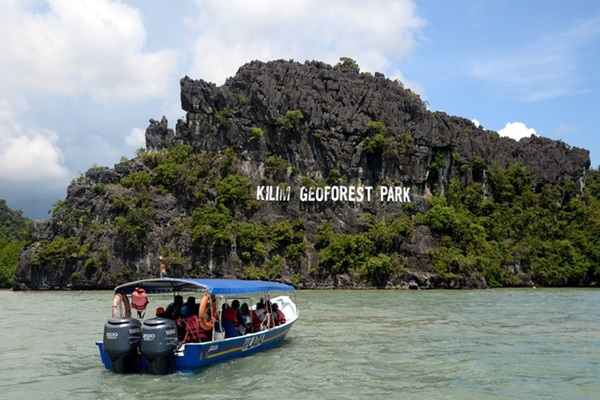
LANGKAWI, July 19 (Bernama) -- Next month, the Langkawi UNESCO Global Geopark will undergo the usual quadrennial revalidation by geologists to verify its quality.
The 52nd Global Geopark Network (GGN) member from a group of 147 around the world managed to keep its UNESCO status through two evaluations in 2011 and 2015.
A statement from the Langkawi Development Authority (LADA) geopark unit today said the revalidation will be carried out by Dr Kirstin Lemon of Ireland and Sigurður Sigursveinsson of Iceland from Aug 7-11.
It added that they will be here to gauge how well the community, administrator, visitors, traders, industry players, non-governmental organisations and others have grasped the concept of a geopark.
“Among the places to be assessed are Kilim Geoforest Park, Langkawi Cable Car Geotrail, Langkawi Research Centre, Kompleks Kraf, Nasi Dagang Pak Malau, Kilang Simen and Sekolah Kebangsaan Temonyong,” the statement said.
Langkawi was declared a geopark by the GGN and endorsed by UNESCO on June 1, 2007, making it the first in Southeast Asia. Currently it is among the ten best islands for eco-tourism in the world.
The geopark unit said it is always willing to share its experience on geopark governance and management due to the fact that Langkawi UNESCO Global Geopark possesses unique natural assets.
-- BERNAMA
LANGKAWI, July 19 (Bernama) -- Next month, the Langkawi UNESCO Global Geopark will undergo the usual quadrennial revalidation by geologists to verify its quality.
The 52nd Global Geopark Network (GGN) member from a group of 147 around the world managed to keep its UNESCO status through two evaluations in 2011 and 2015.
A statement from the Langkawi Development Authority (LADA) geopark unit today said the revalidation will be carried out by Dr Kirstin Lemon of Ireland and Sigurður Sigursveinsson of Iceland from Aug 7-11.
It added that they will be here to gauge how well the community, administrator, visitors, traders, industry players, non-governmental organisations and others have grasped the concept of a geopark.
“Among the places to be assessed are Kilim Geoforest Park, Langkawi Cable Car Geotrail, Langkawi Research Centre, Kompleks Kraf, Nasi Dagang Pak Malau, Kilang Simen and Sekolah Kebangsaan Temonyong,” the statement said.
Langkawi was declared a geopark by the GGN and endorsed by UNESCO on June 1, 2007, making it the first in Southeast Asia. Currently it is among the ten best islands for eco-tourism in the world.
The geopark unit said it is always willing to share its experience on geopark governance and management due to the fact that Langkawi UNESCO Global Geopark possesses unique natural assets.
-- BERNAMA
2019年7月2日星期二
Unesco geoparks may become one
Unesco geoparks may become one
Malaysia and Thailand may soon share the honour of caring for two 550-million-year-old assets joined as one.
The Langkawi Development Authority (Lada) will discuss with Satun province to merge the Unesco Global Geoparks (UGG) on both sides into one.
“As the first transnational UGG in Asia, tourists exploring this natural wonder will be able to move between Langkawi and Satun with the least hassle,” said Lada chief executive officer Dr Hezri Adnan.
He said he has passed this request to Unesco, adding that he will meet the Satun governor next month on the matter.
Langkawi won its UGG status in 2007 while Satun got it just last year.
Dr Hezri said both geoparks were actually formed at the same time, during a massive tectonic event that split apart the old supercontinent Pangea 550 million years ago.
Visitors can view one of the massive granitic boulders that was once a part of Pangea at the newly-opened Langkawi Garden of Rainbows and Butterflies near Telaga Harbour Park.
A single boulder measuring over 45m across was partly unearthed and is now a feature of the garden.
“Geologically speaking, the Satun and Langkawi geoparks are one and the same.
“Our lands share the same ancient history,” he added.
By merging, he said both sides will share the duties of conservation, managed development and promotion.
He said the cross-border attraction will significantly boost Langkawi’s tourism industry and that tourists from around the world will be able to immerse themselves in the natural wonders and cultures of both places with minimum immigration hassle.
Travel time by ferry between Langkawi and Satun geoparks are one and a half hours.
~News courtesy of The Star~
Malaysia and Thailand may soon share the honour of caring for two 550-million-year-old assets joined as one.
The Langkawi Development Authority (Lada) will discuss with Satun province to merge the Unesco Global Geoparks (UGG) on both sides into one.
“As the first transnational UGG in Asia, tourists exploring this natural wonder will be able to move between Langkawi and Satun with the least hassle,” said Lada chief executive officer Dr Hezri Adnan.
He said he has passed this request to Unesco, adding that he will meet the Satun governor next month on the matter.
Langkawi won its UGG status in 2007 while Satun got it just last year.
Dr Hezri said both geoparks were actually formed at the same time, during a massive tectonic event that split apart the old supercontinent Pangea 550 million years ago.
Visitors can view one of the massive granitic boulders that was once a part of Pangea at the newly-opened Langkawi Garden of Rainbows and Butterflies near Telaga Harbour Park.
A single boulder measuring over 45m across was partly unearthed and is now a feature of the garden.
“Geologically speaking, the Satun and Langkawi geoparks are one and the same.
“Our lands share the same ancient history,” he added.
By merging, he said both sides will share the duties of conservation, managed development and promotion.
He said the cross-border attraction will significantly boost Langkawi’s tourism industry and that tourists from around the world will be able to immerse themselves in the natural wonders and cultures of both places with minimum immigration hassle.
Travel time by ferry between Langkawi and Satun geoparks are one and a half hours.
~News courtesy of The Star~
2019年2月6日星期三

2017年9月19日星期二

2016年10月7日星期五

2016年6月7日星期二


2016年5月1日星期日

2016年4月9日星期六

2014年12月9日星期二
Langkawi Sky Bridge to reopen
Langkawi Sky Bridge to reopen
THE Langkawi Sky Bridge, one of the nation’s popular tourist destinations, will be reopened to public by February next year.
Hanging 600m above sea level from the peak of Gunung Mat Cinchang, the 125m-long bridge has been closed since July 10, 2012 for maintenance and upgrading works.
Langkawi Development Authority (Lada) chief executive officer Tan Sri Khalid Ramli said 85 per cent of the project has been completed.
“The sky bridge was closed to the public for safety reasons as part of its steel pillars and floors had corroded.
“The bridge’s main structures were replaced with stainless steel. There will be a 10m-long glass walkway in the middle span as a lookout point for visitors.
“Once the walkway is ready, visitors can enjoy a scenic view of the valley, which is filled with flora and fauna,” he said.
Khalid said the upgrading works were carried out in two phases.
The first involved repair works of the main structure of the bridge at a cost of RM10 million, while the second phase involved constructing an inclinator to transport visitors to the bridge at a cost of RM8 million.

Construction work at the bridge.
The bridge’s main structures have been replaced with stainless steel.
~News courtesy of New Straits Times~
THE Langkawi Sky Bridge, one of the nation’s popular tourist destinations, will be reopened to public by February next year.
Hanging 600m above sea level from the peak of Gunung Mat Cinchang, the 125m-long bridge has been closed since July 10, 2012 for maintenance and upgrading works.
Langkawi Development Authority (Lada) chief executive officer Tan Sri Khalid Ramli said 85 per cent of the project has been completed.
“The sky bridge was closed to the public for safety reasons as part of its steel pillars and floors had corroded.
“The bridge’s main structures were replaced with stainless steel. There will be a 10m-long glass walkway in the middle span as a lookout point for visitors.
“Once the walkway is ready, visitors can enjoy a scenic view of the valley, which is filled with flora and fauna,” he said.
Khalid said the upgrading works were carried out in two phases.
The first involved repair works of the main structure of the bridge at a cost of RM10 million, while the second phase involved constructing an inclinator to transport visitors to the bridge at a cost of RM8 million.
Construction work at the bridge.
The bridge’s main structures have been replaced with stainless steel.
~News courtesy of New Straits Times~
2013年7月25日星期四

2013年7月24日星期三
Langkawi Wildlife Park comes in 10th
Langkawi Wildlife Park comes in 10th
TripAdvisor, the global site that lets travellers rate hotels, restaurants and tourist attractions worldwide, had listed Langkawi Wildlife Park as the top 10 in the 2013 Travelers' Choice Destination awards.
Award winners were determined according to their popularity, taking into account travellers' favourites and how they were rated.
Langkawi Wildlife Park general manager Teoh Cheng Kung said the award was motivation for the staff to strive to provide even better service.
"We would like to thank all the visitors for their support," he said, adding that the park received the award last week.
"We hope this recognition will entice our visitors to stay even longer, repeat their visit and spread word of their experience to their friends back home," he said after attending the event to break fast with orphans organised by the park at Langkasuka Hotel, here, recently.
Kuah assemblyman Nor Saidi Nayan, park operation manager Beh Swee Eng and administrative manager Mazni Sahadan were also present.
Teoh said the park was also being promoted as the perfect location for the filming international and local movies.

Teoh Cheng Kung (second from left) shows the award from Tripadvisor to Nor Saidi Nanyan (third from left) at the event to break fast with orphans at Langkasuka, Langkawi. Pic by Hamzah Osman
~News courtesy of New Straits Times~
TripAdvisor, the global site that lets travellers rate hotels, restaurants and tourist attractions worldwide, had listed Langkawi Wildlife Park as the top 10 in the 2013 Travelers' Choice Destination awards.
Award winners were determined according to their popularity, taking into account travellers' favourites and how they were rated.
Langkawi Wildlife Park general manager Teoh Cheng Kung said the award was motivation for the staff to strive to provide even better service.
"We would like to thank all the visitors for their support," he said, adding that the park received the award last week.
"We hope this recognition will entice our visitors to stay even longer, repeat their visit and spread word of their experience to their friends back home," he said after attending the event to break fast with orphans organised by the park at Langkasuka Hotel, here, recently.
Kuah assemblyman Nor Saidi Nayan, park operation manager Beh Swee Eng and administrative manager Mazni Sahadan were also present.
Teoh said the park was also being promoted as the perfect location for the filming international and local movies.
Teoh Cheng Kung (second from left) shows the award from Tripadvisor to Nor Saidi Nanyan (third from left) at the event to break fast with orphans at Langkasuka, Langkawi. Pic by Hamzah Osman
~News courtesy of New Straits Times~
2013年7月8日星期一
Getaway at Sunset Valley in Langkawi
Weekend getaway at Sunset Valley in Langkawi island

Paddy House, where the writer stayed.
This no-frills getaway offers a hard-to-beat sense of serenity.
THE peace is tangible. You can almost touch the quiet.
I wouldn’t call it a deafening silence but the serenity is almost too good to be true. My weekend sojourn at Sunset Valley Holiday Houses on Pulau Langkawi is exactly what I need to destress from the insane, traffic-infested concrete jungle that is Kuala Lumpur.
The green backdrop of padi fields and sprawling lawns is a clear indication of just how pretty and peaceful this place is. Local movie fans might recognise the surrounds, as Ombak Rindu, the hit 2011 movie starring Aaron Aziz and Maya Karin, was filmed here.
Before you pack your bags, though, you need to know that Sunset Valley is not your typical five-star resort. I would call it a boutique holiday getaway – sans room service. But before you frown at that idea, consider the fact that you won’t have to pay for things you don’t need. Another thing to consider before you go: Are you a nature lover who enjoys waking up to the sound of birds chirping and doesn’t mind the occasional bug or two flying about? If the answer is yes, then this is one place you should visit.
On TripAdvisor.com, you will come across a “complaint” from a guest who ranted about dogs barking and pesky insects. “Yes, we have three dogs and they bark occasionally,” laughs Gudrun Nienaber, the nice German woman who owns Sunset Valley with her Australian husband, David Bradley.
They recently adopted two mongrels named Boris and Sunny as well as another dog called Boikey. They also have a cat named Cinta. “We keep them in our house at night so they don’t disturb the guests,” adds Nienaber.
The couple, who live on Langkawi under the Malaysia My Second Home programme, recently bought over Sunset Valley from the previous Dutch owners. “This opportunity came at the right time, and we love taking care of people and engaging with them,” says Bradley.
But they want to make it very clear that Sunset Valley is not a full-service resort. “There is no changing of towels and sheets nor daily cleaning. Those services are available upon request and for a fee,” Nienaber explains.
This is because the couple believe in operating an environmentally-friendly resort and also in letting guests have the freedom of enjoying their holiday without paying for services they might not want.
For long stay guests, the cleaning takes place once a week. “Cleaning services is RM50 for three hours. Guests can let us know in advance so we can arrange for the cleaning lady. We can also do laundry for a fee,” says Nienaber.
You’ll know how serious they are about going green when you use the toilets: they have notices telling guests not to flush away toilet paper in the toilet bowl (don’t worry, the bathrooms are equipped with spray hoses). This is because the resort is not connected to a commercial sewage system; instead, it uses a septic tank. “We don’t encourage flushing anything down the toilet other than human waste. The water in the septic tank has natural organisms to dispose of human waste but not things like bleached toilet paper, which will clog up the system,” explains Bradley.
There are five individually appointed chalets, namely Forest (a two-bedroom house), Farmer’s, Paddy, Field and Gate, which are each self-contained with kitchenettes and ensuite showers and toilets. All the timber houses are equipped with mosquito nets, ceiling fans, a stove, kettle, microwave and refrigerator each.
I stayed at Paddy House (RM320 per night) and it was indeed a cute and cosy cottage (perfect for honeymooning couples!). It comes with two single beds that can be pushed together and it can also fit two extra beds for a fee of RM40 per additional bed.
I liked the fact that every house has a veranda to cast some shade and capture the breeze during the day. If you want air-conditioning, it is chargeable at RM25 per night (though I found the rooms cool enough at night to do without).
There is also a pool pavilion with an area for guests to barbecue and relax under the stars. There is a stove and microwave too for those who want to cook. I am told that the pool contains ionised water instead of the full-on chlorinated variety that is deadly to the environment. “It’s better for the environment and has extra free radicals in the water that kills all the bugs,” explains Bradley, who you will see painstakingly skimming the pool at 8.30am every day.
If you hanker after activities outside the resort, Bradley recommends the mangrove tour and kayaking activities as well as snorkelling in the waters off Pulau Paya; pickup services to and from the resort to these activities can be arranged. Of course, Langkawi’s main strip, Pantai Cenang, also has an array of choices for outdoor activities.
I find out that there is no restaurant on the premises. “We prefer that the guests feel free to cook for themselves or eat outside. They are welcome to join us for breakfast at 9.30am, which we prepare for a fee, and that gives you a good meal of fruits, eggs, toast, cold cuts, juice and coffee,” Bradley says.
They have a pantry stocked with items such as bread, pasta, mineral water, snacks, beer, instant noodles and canned food, all of which guests can purchase. You will notice the “Sunset Valley Honesty List” on the counter that requires you to list down what you take, according to your conscience.
Free wi-fi is available throughout the resort if you can’t fathom the idea of going offline. And yes, there is no TV! The essential things you need to take with you to Sunset Valley are clothes, toiletries and a good book or two.
From the Langkawi Airport, Sunset Valley is a 15-minute drive heading towards Jalan Makam Mahsuri. From the Kuah jetty, at which you will arrive if you take a boat from Penang or the mainland, it takes about 20 to 25 minutes. If you’d rather not rent a car or motorbike to get to the homes, the couple offers pick-up and drop-off services from both arrival locations – RM25 each way from the airport, and RM35 each way from the jetty.
According to Bradley, they work with two reputable car companies that offer safe and insured cars for rent, available through a counter at the airport or pre-arranged to be delivered at the homes if you want to drive around the island during your stay.
SUNSET VALLEY HOLIDAY HOUSES
Lot 2220 Jalan Makam Mahsuri
Kampung Teluk
07000 Langkawi, Malaysia
Phone: 04-955 1055 / 017-284 4550 / 017-284 4590
E-mail: sunsetvalleyholidayhouses@gmail.com
Website: sunsetvalleyholidayhouses.com
~News courtesy of The Star~
Paddy House, where the writer stayed.
This no-frills getaway offers a hard-to-beat sense of serenity.
THE peace is tangible. You can almost touch the quiet.
I wouldn’t call it a deafening silence but the serenity is almost too good to be true. My weekend sojourn at Sunset Valley Holiday Houses on Pulau Langkawi is exactly what I need to destress from the insane, traffic-infested concrete jungle that is Kuala Lumpur.
The green backdrop of padi fields and sprawling lawns is a clear indication of just how pretty and peaceful this place is. Local movie fans might recognise the surrounds, as Ombak Rindu, the hit 2011 movie starring Aaron Aziz and Maya Karin, was filmed here.
Before you pack your bags, though, you need to know that Sunset Valley is not your typical five-star resort. I would call it a boutique holiday getaway – sans room service. But before you frown at that idea, consider the fact that you won’t have to pay for things you don’t need. Another thing to consider before you go: Are you a nature lover who enjoys waking up to the sound of birds chirping and doesn’t mind the occasional bug or two flying about? If the answer is yes, then this is one place you should visit.
On TripAdvisor.com, you will come across a “complaint” from a guest who ranted about dogs barking and pesky insects. “Yes, we have three dogs and they bark occasionally,” laughs Gudrun Nienaber, the nice German woman who owns Sunset Valley with her Australian husband, David Bradley.
They recently adopted two mongrels named Boris and Sunny as well as another dog called Boikey. They also have a cat named Cinta. “We keep them in our house at night so they don’t disturb the guests,” adds Nienaber.
The couple, who live on Langkawi under the Malaysia My Second Home programme, recently bought over Sunset Valley from the previous Dutch owners. “This opportunity came at the right time, and we love taking care of people and engaging with them,” says Bradley.
But they want to make it very clear that Sunset Valley is not a full-service resort. “There is no changing of towels and sheets nor daily cleaning. Those services are available upon request and for a fee,” Nienaber explains.
This is because the couple believe in operating an environmentally-friendly resort and also in letting guests have the freedom of enjoying their holiday without paying for services they might not want.
For long stay guests, the cleaning takes place once a week. “Cleaning services is RM50 for three hours. Guests can let us know in advance so we can arrange for the cleaning lady. We can also do laundry for a fee,” says Nienaber.
You’ll know how serious they are about going green when you use the toilets: they have notices telling guests not to flush away toilet paper in the toilet bowl (don’t worry, the bathrooms are equipped with spray hoses). This is because the resort is not connected to a commercial sewage system; instead, it uses a septic tank. “We don’t encourage flushing anything down the toilet other than human waste. The water in the septic tank has natural organisms to dispose of human waste but not things like bleached toilet paper, which will clog up the system,” explains Bradley.
There are five individually appointed chalets, namely Forest (a two-bedroom house), Farmer’s, Paddy, Field and Gate, which are each self-contained with kitchenettes and ensuite showers and toilets. All the timber houses are equipped with mosquito nets, ceiling fans, a stove, kettle, microwave and refrigerator each.
I stayed at Paddy House (RM320 per night) and it was indeed a cute and cosy cottage (perfect for honeymooning couples!). It comes with two single beds that can be pushed together and it can also fit two extra beds for a fee of RM40 per additional bed.
I liked the fact that every house has a veranda to cast some shade and capture the breeze during the day. If you want air-conditioning, it is chargeable at RM25 per night (though I found the rooms cool enough at night to do without).
There is also a pool pavilion with an area for guests to barbecue and relax under the stars. There is a stove and microwave too for those who want to cook. I am told that the pool contains ionised water instead of the full-on chlorinated variety that is deadly to the environment. “It’s better for the environment and has extra free radicals in the water that kills all the bugs,” explains Bradley, who you will see painstakingly skimming the pool at 8.30am every day.
If you hanker after activities outside the resort, Bradley recommends the mangrove tour and kayaking activities as well as snorkelling in the waters off Pulau Paya; pickup services to and from the resort to these activities can be arranged. Of course, Langkawi’s main strip, Pantai Cenang, also has an array of choices for outdoor activities.
I find out that there is no restaurant on the premises. “We prefer that the guests feel free to cook for themselves or eat outside. They are welcome to join us for breakfast at 9.30am, which we prepare for a fee, and that gives you a good meal of fruits, eggs, toast, cold cuts, juice and coffee,” Bradley says.
They have a pantry stocked with items such as bread, pasta, mineral water, snacks, beer, instant noodles and canned food, all of which guests can purchase. You will notice the “Sunset Valley Honesty List” on the counter that requires you to list down what you take, according to your conscience.
Free wi-fi is available throughout the resort if you can’t fathom the idea of going offline. And yes, there is no TV! The essential things you need to take with you to Sunset Valley are clothes, toiletries and a good book or two.
From the Langkawi Airport, Sunset Valley is a 15-minute drive heading towards Jalan Makam Mahsuri. From the Kuah jetty, at which you will arrive if you take a boat from Penang or the mainland, it takes about 20 to 25 minutes. If you’d rather not rent a car or motorbike to get to the homes, the couple offers pick-up and drop-off services from both arrival locations – RM25 each way from the airport, and RM35 each way from the jetty.
According to Bradley, they work with two reputable car companies that offer safe and insured cars for rent, available through a counter at the airport or pre-arranged to be delivered at the homes if you want to drive around the island during your stay.
SUNSET VALLEY HOLIDAY HOUSES
Lot 2220 Jalan Makam Mahsuri
Kampung Teluk
07000 Langkawi, Malaysia
Phone: 04-955 1055 / 017-284 4550 / 017-284 4590
E-mail: sunsetvalleyholidayhouses@gmail.com
Website: sunsetvalleyholidayhouses.com
~News courtesy of The Star~
2013年7月4日星期四
Perlis - More than just a stopover
Perlis - More than just a stopover
Perlis may be the smallest state in Malaysia, but holds its own when it comes to a rich historic past and charming attractions.
Perlis is located at the northern part of west coast of Peninsular Malaysia, south of Thailand and north of Kedah. With a population of close to 230,000 people in an area measuring close to 800 square kilometres, Perlis is known as the smallest state in Malaysia.
The capital of Perlis is Kangar and about 10km away is the state's royal capital Arau. For most travellers, Perlis is a stopover on the way to other towns or tourist attractions. For example, Perlis' Padang Besar is a border town that is part of a common route travellers take from Malaysia to Thailand. Perlis' main port and ferry terminal at a small village of Kuala Perlis is also used to get to Langkawi Island, popular with foreign and local tourists.

An aerial view of Kangar town today.
Even though Perlis is seen as a transportation link to other popular destinations, it is ironic that there is no airport in the state. Rail or road are the only options for people to get into Perlis. The nearest airports are located in Alor Setar, Kedah, which is about 40 kilometres away from Kuala Perlis, and on Langkawi island, about 45 kilometres away from Perlis' main port.
Historical go-between
Originally, Perlis was part of Kedah and was ruled by the Siamese, which conquered Kedah in 1821. During Siamese rule, Perlis was called Palit. At that time the Siamese had signed an agreement with the British, where the latter acknowledged the Siamese claim over four northern states – Perlis, Kedah, Kelantan and Terengganu. This treaty, known as the Burney Treaty 1826, assured the British its claim on Penang and rights to trade in Terengganu and Kelantan without interference from the Siamese.
The exiled Kedah Sultan Ahmad Tajuddin and his followers fought for over 12 years to restore the Malaya Sultan to his throne, but finally the Malay ruler accepted the conditions set by the Siamese and resumed his Sultanate in Kedah. The Siamese then separated Perlis as a vassal state, where Sayyid Hussain Jamalulail became the first Raja Perlis or Perlis ruler.
In 1909, the Anglo-Siamese Treaty dissected the ownership of states again, leaving the Siamese' southern Malay states to the British. While the British had installed a Resident in the state, Perlis was returned to the Siamese (or Thailand) during World War II for its alliance with Japan. But this was only done briefly as the annexation ended after the Japanese surrendered. Perlis became part of the Malayan Union, then the Federation of Malaya in 1957 and joined the Federation of Malaysia in 1963.

Bukit Jernih in Chuping is one of the most colourful limestone hills in Perlis.
Perlis today
Kangar is the state capital of Perlis, with a population of about 50,000. The 3000 ha sized town is located by the Perlis river. In the centre of the town lies the Sena district or popularly called “Uptown Sena” by locals.
Most of Perlis' residents are civil servants or farmers who work on the paddy fields in the outskirt areas. The town centre is made up of crisscrossing streets lined by shophouses, typically housing banks, sundry shops and fast food restaurants.
Some believe that the name Kangar came from a hawk species called Kangkok while a different version of its origin is cited in the Perlis state government's website. The website states that under the rule of Sultan Muhyiddin Mansor Shah from 1652, Tok Peduka opened Kangar in 1653. A Kangar tree was found at the river and subsequently he renamed the area, Pelabuhan Pohon Kangar or Port of Kangar tree.
Perlis' main economic activity is rice farming and visitors are able to admire the expansive views of paddy fields, wooden huts and farmers tending to their crop when they travel beyond Kangar. Similarly like Perak, magnificent limestone mountains rise from these flat paddy fields, which add to the charm of Perlis. These mountains or outcroppings as they are known, are part of a long limestone range in Southeast Asia called the Nakawan, which lies on the border of Perlis and Thailand.
This 500 million year old limestone is home to over 600 species of flora and fauna, including 68 mammal species, according to the state tourism department. Visitors can explore the wonders of this limestone environment by visiting the 370-metre long limestone cave called Gua Kelam at Kaki Bukit, all at the Perlis State Park. The only way into the cave is by walking on an eight-foot wide wooden suspension bridge, which links Kaki Bukit to the Wan Tangga Valley.

A sea of green: The breathtaking view of the paddy field in Perlis.
History buffs can enjoy the state museum, Kota Kayang Museum or visit the Syed Alwi State Mosque, the former state mosque which was built in 1910. Other popular sights are the quaint fishing town of Kuala Perlis, popular as a transit hub and also for its local cuisine. A snake and reptile farm is located near Sungai Batu Pahat and surrounded by the Bukit Bintang Forest Reserve, an attraction for nature lovers. At this farm, research is conducted to develop anti-venom medicine for snake bites. It houses over 20 species of snakes and reptiles, including crocodiles and monitor lizards.
~Info courtesy of The Star~
Perlis may be the smallest state in Malaysia, but holds its own when it comes to a rich historic past and charming attractions.
Perlis is located at the northern part of west coast of Peninsular Malaysia, south of Thailand and north of Kedah. With a population of close to 230,000 people in an area measuring close to 800 square kilometres, Perlis is known as the smallest state in Malaysia.
The capital of Perlis is Kangar and about 10km away is the state's royal capital Arau. For most travellers, Perlis is a stopover on the way to other towns or tourist attractions. For example, Perlis' Padang Besar is a border town that is part of a common route travellers take from Malaysia to Thailand. Perlis' main port and ferry terminal at a small village of Kuala Perlis is also used to get to Langkawi Island, popular with foreign and local tourists.
An aerial view of Kangar town today.
Even though Perlis is seen as a transportation link to other popular destinations, it is ironic that there is no airport in the state. Rail or road are the only options for people to get into Perlis. The nearest airports are located in Alor Setar, Kedah, which is about 40 kilometres away from Kuala Perlis, and on Langkawi island, about 45 kilometres away from Perlis' main port.
Historical go-between
Originally, Perlis was part of Kedah and was ruled by the Siamese, which conquered Kedah in 1821. During Siamese rule, Perlis was called Palit. At that time the Siamese had signed an agreement with the British, where the latter acknowledged the Siamese claim over four northern states – Perlis, Kedah, Kelantan and Terengganu. This treaty, known as the Burney Treaty 1826, assured the British its claim on Penang and rights to trade in Terengganu and Kelantan without interference from the Siamese.
The exiled Kedah Sultan Ahmad Tajuddin and his followers fought for over 12 years to restore the Malaya Sultan to his throne, but finally the Malay ruler accepted the conditions set by the Siamese and resumed his Sultanate in Kedah. The Siamese then separated Perlis as a vassal state, where Sayyid Hussain Jamalulail became the first Raja Perlis or Perlis ruler.
In 1909, the Anglo-Siamese Treaty dissected the ownership of states again, leaving the Siamese' southern Malay states to the British. While the British had installed a Resident in the state, Perlis was returned to the Siamese (or Thailand) during World War II for its alliance with Japan. But this was only done briefly as the annexation ended after the Japanese surrendered. Perlis became part of the Malayan Union, then the Federation of Malaya in 1957 and joined the Federation of Malaysia in 1963.
Bukit Jernih in Chuping is one of the most colourful limestone hills in Perlis.
Perlis today
Kangar is the state capital of Perlis, with a population of about 50,000. The 3000 ha sized town is located by the Perlis river. In the centre of the town lies the Sena district or popularly called “Uptown Sena” by locals.
Most of Perlis' residents are civil servants or farmers who work on the paddy fields in the outskirt areas. The town centre is made up of crisscrossing streets lined by shophouses, typically housing banks, sundry shops and fast food restaurants.
Some believe that the name Kangar came from a hawk species called Kangkok while a different version of its origin is cited in the Perlis state government's website. The website states that under the rule of Sultan Muhyiddin Mansor Shah from 1652, Tok Peduka opened Kangar in 1653. A Kangar tree was found at the river and subsequently he renamed the area, Pelabuhan Pohon Kangar or Port of Kangar tree.
Perlis' main economic activity is rice farming and visitors are able to admire the expansive views of paddy fields, wooden huts and farmers tending to their crop when they travel beyond Kangar. Similarly like Perak, magnificent limestone mountains rise from these flat paddy fields, which add to the charm of Perlis. These mountains or outcroppings as they are known, are part of a long limestone range in Southeast Asia called the Nakawan, which lies on the border of Perlis and Thailand.
This 500 million year old limestone is home to over 600 species of flora and fauna, including 68 mammal species, according to the state tourism department. Visitors can explore the wonders of this limestone environment by visiting the 370-metre long limestone cave called Gua Kelam at Kaki Bukit, all at the Perlis State Park. The only way into the cave is by walking on an eight-foot wide wooden suspension bridge, which links Kaki Bukit to the Wan Tangga Valley.
A sea of green: The breathtaking view of the paddy field in Perlis.
History buffs can enjoy the state museum, Kota Kayang Museum or visit the Syed Alwi State Mosque, the former state mosque which was built in 1910. Other popular sights are the quaint fishing town of Kuala Perlis, popular as a transit hub and also for its local cuisine. A snake and reptile farm is located near Sungai Batu Pahat and surrounded by the Bukit Bintang Forest Reserve, an attraction for nature lovers. At this farm, research is conducted to develop anti-venom medicine for snake bites. It houses over 20 species of snakes and reptiles, including crocodiles and monitor lizards.
~Info courtesy of The Star~
2013年7月3日星期三
Snakes & tigers alive! - Ulu Muda Forest Reserve
Snakes and tigers alive!

Hello folkssss:A glisteninggreen snakespotted bytrekkers.
The Ulu Muda Forest Reserve in Kedah is a treasure trove of natural wonders and wildlife.
OUR women don’t go rowing boats into the jungle or paddle down rapids,” grinned the guide, as I balanced myself on the little wooden boat and jumped into the river to push the boat.
Well, I had to help the guide push the flimsy boat laden with rucksacks, equipment, tents and food.
What made me want to spend four days in the jungle and brave bloodthirsty leeches, mosquitoes, wild boar ticks and risk my limbs being punctured by sharp thorns?
Well, imagine sitting in a boat at night, listening to the music of crickets and cicadas, gazing into the night sky dotted with stars and enjoying the light show by the fireflies in the trees.
No! This did not happen on a river cruise on the outskirts of a town, but in the middle of a jungle in the wilderness of the Ulu Muda forests in Kedah. The forests in the very north of West Malaysia continues into southern Thailand.
The Penang Nature Society members I was with drove up to Baling, heading towards Lake Muda.
The Ulu Muda Forest Reserve was gazetted as a permanent Forest Reserve in 1932 to protect the Muda river water catchment area which covers some 980sqkm and forms part of the Muda Irrigation Project.
This project is designed to channel water to the padi fields that spread across almost 100,000ha of the fertile Kedah and Perlis coastal plains. Sadly, logging in Baling has destroyed much of the flora and fauna in this forest. Two years ago, the water level was higher and the little boats could move easily in Muda River. As a result of logging, a huge amount of sand has been deposited into the river.
From the jetty, we took a seven-hour boat ride to our campsite where the water was clearer. All the way there , we were greeted by eagles, egrets and bee-eaters which soared in the hot sky.
Watch out! A crocodile swimming in the lake? Luckily it was just a huge monitor lizard cooling itself in the muddy water of the lake. And look, a wild boar drinking water at the sandbank.
Almost everywhere on the river bank, we saw elephant tracks. The sides of the bank were eroded, revealing patches of red earth trampled by wild animals.
There was a bustle of activity on the river bank: an egret flying down to catch a big, reddish dragonfly; crabs crawling hurriedly in the mud; geckos darting around the hot sand; hundreds of butterflies in myriad hues flapping their wings while sucking in water from the sand.
“Stop!” grunted the boat man as he jumped into the shallow water to push his boat which had become stuck.
We got down to help him push the boat. I was fortunate to have two able-bodied men in my boat and thus did not have to help push the boat that much. At times, her gender gives a woman an advantage, for men do readily offer help in precarious situations!
After seven hours under the fiery sun, we reached our destination and set up our tents. I jumped into the cool water but the strong current pushed me over the rocks.
Ouch! My knees were knocked blue-black! The river is definitely not a place for the beauty-conscious and fair lady type. I thanked my lucky stars when the men offered gallantly to cook for me.
After a hearty meal of steamed rice and canned fish, I was looking forward to a slumber when a loud shriek rang in the air. A snake! It had slithered under Alastair’s ground sheet. Look out! There was another one following behind.
That was it! The ladies ran all around the tents in panic, and I found I had goose-pimples.
“Can we camp somewhere else?” I shivered.
“In pitch darkness? No way” replied Alastair.
He trailed the snake and found a nest in a hole. Somehow he caught it and relocated it across the river the next morning. We identified it as a krait – a lovely black snake with white bands across its slim body. The book we brought along described it as a fast snake which can be very aggressive if threatened.
Gibbons and growls
The next day, we were greeted by the calls of the gibbons and saw a serpent eagle seizing a snake in its beak. More excitement was in store as we trekked to discover more natural wonders.
In fact, the sides of the river were akin to mini-cities of bustling life. Huge ants scurried around with scraps in their jaws, and big dragonflies were everywhere. The growing interest in dragonflies is not purely about aesthetics but because of their applications – one of which is as “bio-control” agents.
As dragonfly larvae feed on mosquito larvae, they help keep the pesky insect at bay.
Insect life appeared to be quite abundant as our body sweat attracted many insects. Countless multicoloured butterflies settled on our wet shirts as we attempted to take photographs of these beauties. We took footprints of elephants, tapirs, otters and boars in plaster of Paris as souvenirs. The tapir had four toes in front and three toes behind.
Then, suddenly, the group in front stopped in their tracks. “Sshh!”
A loud growl was heard and my hair stood on end. It was a tiger in the bushes meters away in the forest as we stood quietly together. The loud roar of the boat’s engine rang as it headed for our direction and that must have scared the animal away.
My worries dissolved at the thought of seeing more wild animals. Money could not buy such rare sights in the city, and life can be lived to the fullest by being adventurous. No wonder our guides carried a long parang for defence and to cut the thorny plants that blocked our way.
Often we followed the elephants’ trails which were clearly a soggy path to a salt lick or river. We climbed up a hide, several meters high over a salt lick to watch otters. Scattered areas of intrusive granite rocks are the source of several hot mineral springs and a salt lick, including Sira Hangat.
We smelled the hot sulphur as we sat by the mineral spring. We popped eggs into the hot spring and had a feast later. When we were hot, we peeled off our shirts and jumped into the cool and refreshing water amidst the chirping of birds.
Ah! What more could one ask for! By now, my feet and shoes weighed a few kilograms for I had been treading through water for hours. I marvelled at the tough guide who walked barefoot for hours on the river bed stones. Despite the heavy rain, we plodded on, having no choice. The kampung Adidas rubber shoes were suitable for river walking but I had only my heavy, hill-climbing shoes.
Oh, look to the right! I whispered to the others. A group of wild boar were near the salt lick. What a fascinating sight! Look up! There were great hornbills in the air. We watched the local men climb tualang trees to the honey combs.
These memorable sights will remain in our hearts, always. For more information on camping in Ulu Muda, contact the writer at tpeggypeach@yahoo.com.
Location: About 420km north of Kuala Lumpur. Leave the North-South Expressway at the Gurun exit and travel about 100km north-east to Gubir, the entry point to Muda Lake.
Attractions: Remote unspoiled tropical rainforest wilderness, abundant fishing, rainforest treks, opportunity to sight large mammals, true untamed jungle experience.
Facilities and accommodation: Camping in reserve area and hostel. Nearby Pudu Lake Resort provides good chalet accommodation and associate d facilities. Food, drinks and petrol available at Gubir. Longboats and local guides for hire.
Activities: Fishing, trekking, swimming, camping, night walks, bird and butterfly watching.
~News courtesy of The Star~
2012年10月7日星期日

订阅:
博文 (Atom)