2025年8月16日星期六

2025年5月5日星期一
2025年3月19日星期三
2023年7月3日星期一
2020年3月2日星期一
玻大臣欢迎游客参观朱宾超级水果谷
玻大臣欢迎游客参观朱宾超级水果谷
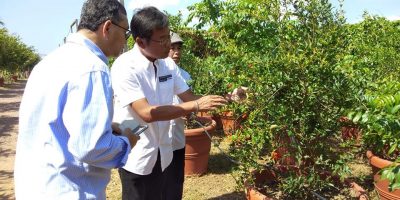
林伟荣(左2)向阿兹兰(左1)分享种植超级水果的心得。
玻璃市州务大臣拿督斯里阿兹兰欢迎游客到来参观被誉为东南亚最大及全马唯一的无花果种植园”超级水果谷”(Superfruit Valley)。
他说,游客可以在前往毗邻马泰边境的巴东勿刹时,途经朱宾路到”超级水果谷”。
他说,游客向来在巴东勿刹旅游时,都是逛边境的买卖市集而已,如今,他们的行程可再增加一个观光地点,体验大自然的农业旅游,也延长在玻州逗留的时间。
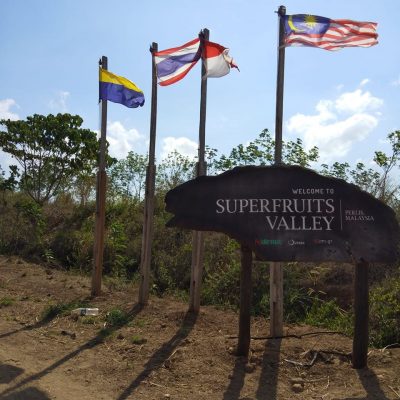
超级水果谷位于玻州朱宾。
他说,配合2021年玻州旅游年,玻州政府已把朱宾超级水果谷列为本地农业旅游的产品之一,并开始向外大力推广,以吸引国内外的游客慕名而来,借此增加玻州收入。
阿兹兰出席颁发证书给6名在朱宾超级水果谷完成6个月农业培训的实习生后,这么说。
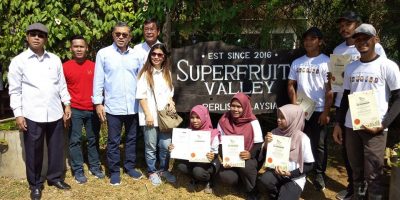
阿兹兰(左3)与6名在朱宾超级水果谷完成6个月农业培训的实习生合影。左4后者:林伟荣。
占地125英亩的朱宾超级水果谷,是由Fig Direct私人有限公司于2016年注资及开发。
该公司的执行董事林伟荣说,他向玻州政府申请后,获得批准建造一段长达约3公里的路段直通果园,如今已开放给大众自行驾车驶入果园参观。
果园内种植无花果、柠檬、桑果、巴西莓、石榴、木鱉果、百香果等,皆是高价值水果。
他说,果园内种植无花果、柠檬、桑果、巴西莓、石榴、木鱉果、百香果等,皆是高价值水果。
从入口处驾车驶入果园的一路上,一望无际的园地映入眼帘,让人们视觉上的放松,享受大自然的美景。
~光华日报~
林伟荣(左2)向阿兹兰(左1)分享种植超级水果的心得。
玻璃市州务大臣拿督斯里阿兹兰欢迎游客到来参观被誉为东南亚最大及全马唯一的无花果种植园”超级水果谷”(Superfruit Valley)。
他说,游客可以在前往毗邻马泰边境的巴东勿刹时,途经朱宾路到”超级水果谷”。
他说,游客向来在巴东勿刹旅游时,都是逛边境的买卖市集而已,如今,他们的行程可再增加一个观光地点,体验大自然的农业旅游,也延长在玻州逗留的时间。
超级水果谷位于玻州朱宾。
他说,配合2021年玻州旅游年,玻州政府已把朱宾超级水果谷列为本地农业旅游的产品之一,并开始向外大力推广,以吸引国内外的游客慕名而来,借此增加玻州收入。
阿兹兰出席颁发证书给6名在朱宾超级水果谷完成6个月农业培训的实习生后,这么说。
阿兹兰(左3)与6名在朱宾超级水果谷完成6个月农业培训的实习生合影。左4后者:林伟荣。
占地125英亩的朱宾超级水果谷,是由Fig Direct私人有限公司于2016年注资及开发。
该公司的执行董事林伟荣说,他向玻州政府申请后,获得批准建造一段长达约3公里的路段直通果园,如今已开放给大众自行驾车驶入果园参观。
果园内种植无花果、柠檬、桑果、巴西莓、石榴、木鱉果、百香果等,皆是高价值水果。
他说,果园内种植无花果、柠檬、桑果、巴西莓、石榴、木鱉果、百香果等,皆是高价值水果。
从入口处驾车驶入果园的一路上,一望无际的园地映入眼帘,让人们视觉上的放松,享受大自然的美景。
~光华日报~
2020年2月22日星期六
Thai ‘kereta sapu’ stealing business from taxi drivers
Thai ‘kereta sapu’ stealing business from taxi drivers
“It is very difficult to earn even RM20 a day. They (Thais) just hop over easily and offer fares that are much lower and steal our customers, ” lamented a 46-year-old taxi driver who wanted to be known only as Amran.
He complained that the situation involving the transport operators from Thailand has persisted for years.
“...depa (they) operate as though they are immune to the law and are free to pick up passengers, ” he said when met at the Padang Besar taxi stand here.
He said these illegal operators not only ferry passengers around Padang Besar but also transport workers of Thai restaurants in Penang, Alor Setar and Seremban to renew their social visit passes at the Padang Besar Customs, Immigration and Quarantine Complex.
Most of these illegal operators, he said, were from Pattani and Songkhla in southern Thailand and carried out their activities during the school holidays and weekends.
Amran disclosed that they had three illegal stands around here, one in front of the Padang Besar Railway Station, another in front of Arked Niaga Padang Besar and the other in front of the Padang Besar Fire and Rescue Station and that it is not difficult to identify the vehicles because they have tinted windows and Thai registration plates.
“When the JPJ (Road Transport Department) officers are on patrol, they just ‘disappear’, ” he said.
“This is all I made today, not even RM20 toiling from morning to evening. If it continues, I don’t know how I will feed my wife and children, ” he said, showing a RM10 note and a few RM1 notes that he had.
Amran said he and several other fellow taxi drivers have lodged complaints with the authorities and even furnished photographs and video recordings of the illegal activities.
“The patrols carried out by the authorities are not enough to stamp out this menace, ” he said.
Also affected by these kereta sapu (pirate taxis) is a fellow taxi driver identified only as Rahmat, 52, who claims that the local taxi drivers are living a hand-to-mouth existence now, unlike five years ago.
He has been in the business over the last 11 years and recounted the good old days when the returns were lucrative with domestic and foreign tourists alike patronising their services because they (tourists) did not have much choice then.
“Now, they (the pirates) not only pick up passengers on the Malaysian side but also bring passengers in and out of Thailand.
“Depa (they) are having the best of both worlds, ” he said.
If kereta sapu and vans are not bad enough, he revealed, there is now the added menace of motosikal sapu (pirate motorcyclists) from Thailand.
The father of four said that, to his knowledge, they are only allowed to operate in Thailand and cannot pick up passengers on the Malaysian side.
Checks by Bernama found the pirate cars, vans and motorcycles from Thailand operating daily, from 10am to 6pm.
During the Chinese New Year festive season, Bernama found about 50 pirate motorcycles operating, charging fares ranging from RM7 to RM10 for a trip to Padang Besar town on the Thai side.
Rahmat said the authorities, including the state government, must think of ways to overcome the problem. “If this is not cleaned up, my taxi will end up a rust bucket, ” he said. — Bernama
“It is very difficult to earn even RM20 a day. They (Thais) just hop over easily and offer fares that are much lower and steal our customers, ” lamented a 46-year-old taxi driver who wanted to be known only as Amran.
He complained that the situation involving the transport operators from Thailand has persisted for years.
“...depa (they) operate as though they are immune to the law and are free to pick up passengers, ” he said when met at the Padang Besar taxi stand here.
He said these illegal operators not only ferry passengers around Padang Besar but also transport workers of Thai restaurants in Penang, Alor Setar and Seremban to renew their social visit passes at the Padang Besar Customs, Immigration and Quarantine Complex.
Most of these illegal operators, he said, were from Pattani and Songkhla in southern Thailand and carried out their activities during the school holidays and weekends.
Amran disclosed that they had three illegal stands around here, one in front of the Padang Besar Railway Station, another in front of Arked Niaga Padang Besar and the other in front of the Padang Besar Fire and Rescue Station and that it is not difficult to identify the vehicles because they have tinted windows and Thai registration plates.
“When the JPJ (Road Transport Department) officers are on patrol, they just ‘disappear’, ” he said.
“This is all I made today, not even RM20 toiling from morning to evening. If it continues, I don’t know how I will feed my wife and children, ” he said, showing a RM10 note and a few RM1 notes that he had.
Amran said he and several other fellow taxi drivers have lodged complaints with the authorities and even furnished photographs and video recordings of the illegal activities.
“The patrols carried out by the authorities are not enough to stamp out this menace, ” he said.
Also affected by these kereta sapu (pirate taxis) is a fellow taxi driver identified only as Rahmat, 52, who claims that the local taxi drivers are living a hand-to-mouth existence now, unlike five years ago.
He has been in the business over the last 11 years and recounted the good old days when the returns were lucrative with domestic and foreign tourists alike patronising their services because they (tourists) did not have much choice then.
“Now, they (the pirates) not only pick up passengers on the Malaysian side but also bring passengers in and out of Thailand.
“Depa (they) are having the best of both worlds, ” he said.
If kereta sapu and vans are not bad enough, he revealed, there is now the added menace of motosikal sapu (pirate motorcyclists) from Thailand.
The father of four said that, to his knowledge, they are only allowed to operate in Thailand and cannot pick up passengers on the Malaysian side.
Checks by Bernama found the pirate cars, vans and motorcycles from Thailand operating daily, from 10am to 6pm.
During the Chinese New Year festive season, Bernama found about 50 pirate motorcycles operating, charging fares ranging from RM7 to RM10 for a trip to Padang Besar town on the Thai side.
Rahmat said the authorities, including the state government, must think of ways to overcome the problem. “If this is not cleaned up, my taxi will end up a rust bucket, ” he said. — Bernama
2020年1月22日星期三
Perlis ruler wants private sector to help develop state tourism
Perlis ruler wants private sector to help develop state tourism
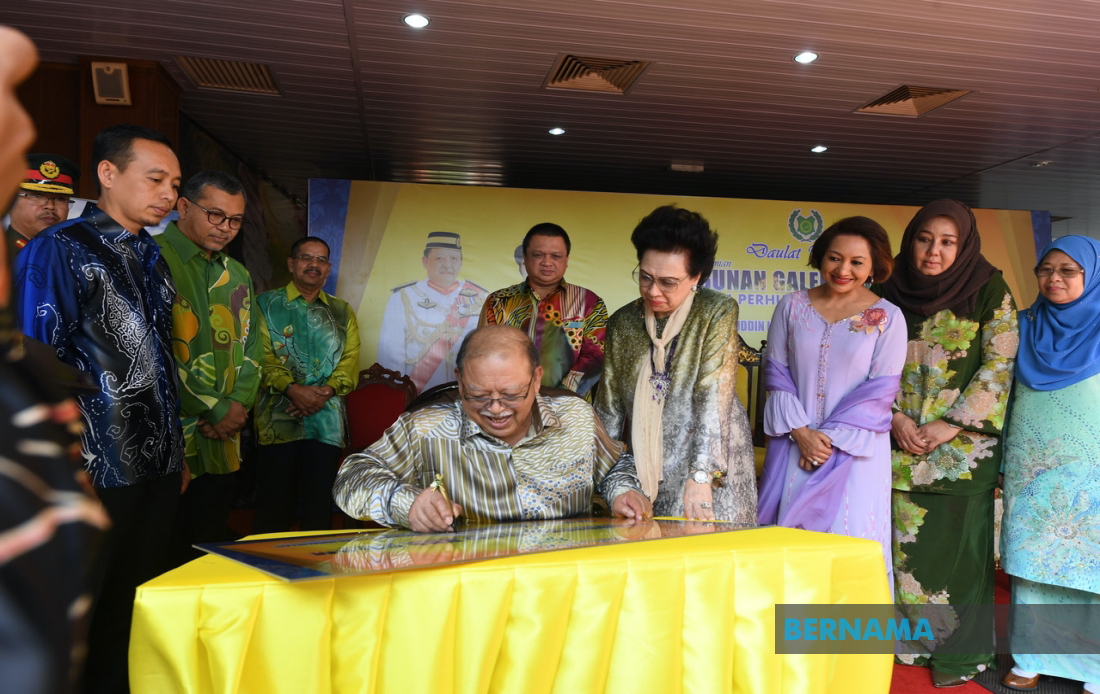
The Raja of Perlis, Tuanku Syed Sirajuddin Putra Jamalullail today encouraged private sector companies with investment capital to help develop more tourist spots in the state.
However, he said this should be supported by the state government's policies that could help facilitate the effort in order to boost the state's tourism industry.
“In developing the tourism industry, we should be able to attract foreign tourists to spend at least one night here because we cannot only depend on domestic tourists,” he said in his Royal Address when opening the Gua Kelam gallery at the Gua Kelam Ecotourism Complex here today.
Also gracing the event were the Raja Perempuan of Perlis Tuanku Tengku Fauziah Tengku Abdul Rashid, the Raja Muda of Perlis Tuanku Syed Faizuddin Putra Jamalullail and the Raja Puan Muda of Perlis Tuanku Lailatul Shahreen Akashah Khalil.
Also present was Perlis Menteri Besar Datuk Seri Azlan Man.
Tuanku Syed Sirajuddin said the tourism industry in Perlis should also offer unique travelling experiences to tourists.
“With the unique tourist attractions coupled with beautiful Perlis' beautiful landscape, I believe that more foreign tourists will be thrilled to visit the state,” he said.
His Highness called on all parties to join hands in promoting the Visit Malaysia 2020 and the Visit Perlis 2021 campaign.
Tuanku Syed Sirajuddin also urged the people of Perlis to play their role in keeping the state clean and not depend entirely on the local authorities to do the job.
“There is no point of having a beautiful place but the area is filled with rubbish. I don't want foreign tourists who come to Perlis to enjoy its beauty but what they remember is the eyesore,” he said
--BERNAMA
The Raja of Perlis, Tuanku Syed Sirajuddin Putra Jamalullail today encouraged private sector companies with investment capital to help develop more tourist spots in the state.
However, he said this should be supported by the state government's policies that could help facilitate the effort in order to boost the state's tourism industry.
“In developing the tourism industry, we should be able to attract foreign tourists to spend at least one night here because we cannot only depend on domestic tourists,” he said in his Royal Address when opening the Gua Kelam gallery at the Gua Kelam Ecotourism Complex here today.
Also gracing the event were the Raja Perempuan of Perlis Tuanku Tengku Fauziah Tengku Abdul Rashid, the Raja Muda of Perlis Tuanku Syed Faizuddin Putra Jamalullail and the Raja Puan Muda of Perlis Tuanku Lailatul Shahreen Akashah Khalil.
Also present was Perlis Menteri Besar Datuk Seri Azlan Man.
Tuanku Syed Sirajuddin said the tourism industry in Perlis should also offer unique travelling experiences to tourists.
“With the unique tourist attractions coupled with beautiful Perlis' beautiful landscape, I believe that more foreign tourists will be thrilled to visit the state,” he said.
His Highness called on all parties to join hands in promoting the Visit Malaysia 2020 and the Visit Perlis 2021 campaign.
Tuanku Syed Sirajuddin also urged the people of Perlis to play their role in keeping the state clean and not depend entirely on the local authorities to do the job.
“There is no point of having a beautiful place but the area is filled with rubbish. I don't want foreign tourists who come to Perlis to enjoy its beauty but what they remember is the eyesore,” he said
--BERNAMA
2020年1月14日星期二
Four more ETS services for CNY
Four more ETS services for CNY
KTMB will add four more ETS services for the Chinese New Year holidays, says Transport Minister Anthony Loke.
He said the Cabinet has approved the use of new ETS train sets to run additional services from Jan 20 to 24 for north-bound destinations from KL Sentral to Butterworth, as well as from KL Sentral to Padang Besar.
Likewise, additional services will also run from Jan 27 to 31.
These additional services offer 12,480 seats, which includes 1,440 business class seats.
Tickets for these additional services for CNY will be sold beginning today.
For more information, visit www.ktmb.com.my.
Loke made the announcement after visiting the railway yard here owned by Dhaya Maju Infrastructure (Asia) Sdn Bhd (DMIA).
He was there along with Prime Minister Tun Dr Mahathir Mohamad, who made his maiden visit to this facility that supports the rehabilitation of KTMB’s Klang Valley Double Track undertaken jointly by DMIA and Lembaga Tabung Angkatan Tentera.
Dr Mahathir expressed satisfaction with what he saw and said that Malaysians must learn to undertake more complex engineering and construction challenges, even if it seems more costly at the beginning.
“I don’t care so much about the savings, but we can’t keep on importing from others.
“We must learn and we have to pay the costs. Initially, it won’t be so good, but ultimately we will reach the standard of other countries.
“If we keep on buying, we will never develop this country,” said Dr Mahathir.
In the Asean region, only Malaysia is operating electrified inter-city train services.
~The Star~
KTMB will add four more ETS services for the Chinese New Year holidays, says Transport Minister Anthony Loke.
He said the Cabinet has approved the use of new ETS train sets to run additional services from Jan 20 to 24 for north-bound destinations from KL Sentral to Butterworth, as well as from KL Sentral to Padang Besar.
Likewise, additional services will also run from Jan 27 to 31.
These additional services offer 12,480 seats, which includes 1,440 business class seats.
Tickets for these additional services for CNY will be sold beginning today.
For more information, visit www.ktmb.com.my.
Loke made the announcement after visiting the railway yard here owned by Dhaya Maju Infrastructure (Asia) Sdn Bhd (DMIA).
He was there along with Prime Minister Tun Dr Mahathir Mohamad, who made his maiden visit to this facility that supports the rehabilitation of KTMB’s Klang Valley Double Track undertaken jointly by DMIA and Lembaga Tabung Angkatan Tentera.
Dr Mahathir expressed satisfaction with what he saw and said that Malaysians must learn to undertake more complex engineering and construction challenges, even if it seems more costly at the beginning.
“I don’t care so much about the savings, but we can’t keep on importing from others.
“We must learn and we have to pay the costs. Initially, it won’t be so good, but ultimately we will reach the standard of other countries.
“If we keep on buying, we will never develop this country,” said Dr Mahathir.
In the Asean region, only Malaysia is operating electrified inter-city train services.
~The Star~
2018年9月17日星期一


2018年6月19日星期二
Information gallery on Kelam Cave in the works
Information gallery on Kelam Cave in the works

Tourist attraction: A file photo showing people walking up to the entrance of Kelam Cave at Kaki Bukit, Perlis.
The Kelam Cave, a unique tourist attraction in Perlis, will have a gallery that contains information on the limestone cave as well as its distinctive flora and fauna.
Originally a tin miners’ building that was restored through a government allocation last year, Perlis Forestry Department director Awang Shafie Awang Ahmad said it would be ready in October.
He said the gallery would have information on the cave’s history, rocks, unique plant species in Perlis and samples of preserved animal species that were suitable as educational material.
“Important information, such as the age and stone formations of the Kelam Cave, will be showcased so that visitors, especially students, can relate the cave to the existence of dinosaurs,” he said.
The cave, located in Kaki Bukit, 33km from Kangar, was closed for over a year after the pedestrian walkway in the 370m long cave was damaged.
The repairs are almost completed, Awang Shafie said.
He said the department would organise a pre-launch of the gallery in September to keep the people updated on the cave’s developments.
On another matter, Awang Shafie said the department would apply for a Federal allocation to restore its information centre in Wang Kelian that had not been in operation over the past few years.
He said this was necessary for the promotion of the centre, which had chalets and accommodation for rent to the public.
“We will maintain these facilities but since a prohibition on the free movement of people between Wang Kelian (Malaysia) and Wang Prachan (Thailand) was imposed two years ago, the information centre has been inactive without visitors,” he added. — Bernama
~News courtesy of The Star~
Tourist attraction: A file photo showing people walking up to the entrance of Kelam Cave at Kaki Bukit, Perlis.
The Kelam Cave, a unique tourist attraction in Perlis, will have a gallery that contains information on the limestone cave as well as its distinctive flora and fauna.
Originally a tin miners’ building that was restored through a government allocation last year, Perlis Forestry Department director Awang Shafie Awang Ahmad said it would be ready in October.
He said the gallery would have information on the cave’s history, rocks, unique plant species in Perlis and samples of preserved animal species that were suitable as educational material.
“Important information, such as the age and stone formations of the Kelam Cave, will be showcased so that visitors, especially students, can relate the cave to the existence of dinosaurs,” he said.
The cave, located in Kaki Bukit, 33km from Kangar, was closed for over a year after the pedestrian walkway in the 370m long cave was damaged.
The repairs are almost completed, Awang Shafie said.
He said the department would organise a pre-launch of the gallery in September to keep the people updated on the cave’s developments.
On another matter, Awang Shafie said the department would apply for a Federal allocation to restore its information centre in Wang Kelian that had not been in operation over the past few years.
He said this was necessary for the promotion of the centre, which had chalets and accommodation for rent to the public.
“We will maintain these facilities but since a prohibition on the free movement of people between Wang Kelian (Malaysia) and Wang Prachan (Thailand) was imposed two years ago, the information centre has been inactive without visitors,” he added. — Bernama
~News courtesy of The Star~
2018年2月20日星期二


2015年8月19日星期三
Airport to be built in Perlis
Airport to be built in Perlis
An airport will be built in Perlis as a catalyst to boost the state's development, said Mentri Besar Datuk Seri Azlan Man.
It would be built in Chuping, incline with the state government's efforts to turn the area into a development hub, he said in his speech at the monthly assembly for civil servants in the state here today.
The text of the speech was read by State secretary Romli Dai, who also launched the state-level Fly the Jalur Gemilang campaign.
He did not mention the cost of the proposed project, but said the airport would have landing facility for small aircraft to "facilitate local and foreign investors to come to the state".
Azlan said he believed the presence of the aircraft would help to boost development in Perlis in line with efforts to turn it into a developed state.
The text of the speech was read by State secretary Romli Dai, who also launched the state-level Fly the Jalur Gemilang campaign.
~News courtesy of Bernama~
An airport will be built in Perlis as a catalyst to boost the state's development, said Mentri Besar Datuk Seri Azlan Man.
It would be built in Chuping, incline with the state government's efforts to turn the area into a development hub, he said in his speech at the monthly assembly for civil servants in the state here today.
The text of the speech was read by State secretary Romli Dai, who also launched the state-level Fly the Jalur Gemilang campaign.
He did not mention the cost of the proposed project, but said the airport would have landing facility for small aircraft to "facilitate local and foreign investors to come to the state".
Azlan said he believed the presence of the aircraft would help to boost development in Perlis in line with efforts to turn it into a developed state.
The text of the speech was read by State secretary Romli Dai, who also launched the state-level Fly the Jalur Gemilang campaign.
~News courtesy of Bernama~
2014年10月28日星期二
Perlis govt looking at ways to save Putra Palace
Perlis govt looking at ways to save Putra Palace
THE Perlis government is studying several options to sustain Putra Palace Hotel, a subsidiary of the State Economic Development Corporation, including privatising it.
Menteri Besar Datuk Seri Azlan Man said to date, a number of parties have shown keen interest in taking over the hotel management.
However, Azlan stressed that the government had yet to decide on the privatisation move and would consider other options to further develop the hotel and make it profitable again, after suffering losses for the past years.
“The state government has limited expertise and capability in running businesses such as the hospitality sector.
“We need more professionals and experts in the related field to manage the hotel and bring it back to black,” he said at a press conference recently.
Citing an example, he said the decision to privatise the state government-owned Institusi Pengajian Tinggi Islam Perlis (IPTIPs) had yielded positive results although there were sceptics in the early stage.
Having said so, Azlan pointed out that it was important for the state administration to evaluate the options wisely.
“We want to make sure there is balance participation and close cooperation between both the government and private sector.
“As I said previously, the private sector played an equally important role in the state economic development,” he said.
The second series of the 2013 Audit Report revealed that Putra Palace Hotel’s pre-tax losses had risen by 205.3 per cent from RM530,000 in 2011 to RM1.16 million in 2012.

A number of parties have shown keen interest in taking over the management of Hotel Putra Palace.
~News courtesy of New Straits Times~
THE Perlis government is studying several options to sustain Putra Palace Hotel, a subsidiary of the State Economic Development Corporation, including privatising it.
Menteri Besar Datuk Seri Azlan Man said to date, a number of parties have shown keen interest in taking over the hotel management.
However, Azlan stressed that the government had yet to decide on the privatisation move and would consider other options to further develop the hotel and make it profitable again, after suffering losses for the past years.
“The state government has limited expertise and capability in running businesses such as the hospitality sector.
“We need more professionals and experts in the related field to manage the hotel and bring it back to black,” he said at a press conference recently.
Citing an example, he said the decision to privatise the state government-owned Institusi Pengajian Tinggi Islam Perlis (IPTIPs) had yielded positive results although there were sceptics in the early stage.
Having said so, Azlan pointed out that it was important for the state administration to evaluate the options wisely.
“We want to make sure there is balance participation and close cooperation between both the government and private sector.
“As I said previously, the private sector played an equally important role in the state economic development,” he said.
The second series of the 2013 Audit Report revealed that Putra Palace Hotel’s pre-tax losses had risen by 205.3 per cent from RM530,000 in 2011 to RM1.16 million in 2012.
A number of parties have shown keen interest in taking over the management of Hotel Putra Palace.
~News courtesy of New Straits Times~
2013年7月4日星期四
Perlis - More than just a stopover
Perlis - More than just a stopover
Perlis may be the smallest state in Malaysia, but holds its own when it comes to a rich historic past and charming attractions.
Perlis is located at the northern part of west coast of Peninsular Malaysia, south of Thailand and north of Kedah. With a population of close to 230,000 people in an area measuring close to 800 square kilometres, Perlis is known as the smallest state in Malaysia.
The capital of Perlis is Kangar and about 10km away is the state's royal capital Arau. For most travellers, Perlis is a stopover on the way to other towns or tourist attractions. For example, Perlis' Padang Besar is a border town that is part of a common route travellers take from Malaysia to Thailand. Perlis' main port and ferry terminal at a small village of Kuala Perlis is also used to get to Langkawi Island, popular with foreign and local tourists.

An aerial view of Kangar town today.
Even though Perlis is seen as a transportation link to other popular destinations, it is ironic that there is no airport in the state. Rail or road are the only options for people to get into Perlis. The nearest airports are located in Alor Setar, Kedah, which is about 40 kilometres away from Kuala Perlis, and on Langkawi island, about 45 kilometres away from Perlis' main port.
Historical go-between
Originally, Perlis was part of Kedah and was ruled by the Siamese, which conquered Kedah in 1821. During Siamese rule, Perlis was called Palit. At that time the Siamese had signed an agreement with the British, where the latter acknowledged the Siamese claim over four northern states – Perlis, Kedah, Kelantan and Terengganu. This treaty, known as the Burney Treaty 1826, assured the British its claim on Penang and rights to trade in Terengganu and Kelantan without interference from the Siamese.
The exiled Kedah Sultan Ahmad Tajuddin and his followers fought for over 12 years to restore the Malaya Sultan to his throne, but finally the Malay ruler accepted the conditions set by the Siamese and resumed his Sultanate in Kedah. The Siamese then separated Perlis as a vassal state, where Sayyid Hussain Jamalulail became the first Raja Perlis or Perlis ruler.
In 1909, the Anglo-Siamese Treaty dissected the ownership of states again, leaving the Siamese' southern Malay states to the British. While the British had installed a Resident in the state, Perlis was returned to the Siamese (or Thailand) during World War II for its alliance with Japan. But this was only done briefly as the annexation ended after the Japanese surrendered. Perlis became part of the Malayan Union, then the Federation of Malaya in 1957 and joined the Federation of Malaysia in 1963.

Bukit Jernih in Chuping is one of the most colourful limestone hills in Perlis.
Perlis today
Kangar is the state capital of Perlis, with a population of about 50,000. The 3000 ha sized town is located by the Perlis river. In the centre of the town lies the Sena district or popularly called “Uptown Sena” by locals.
Most of Perlis' residents are civil servants or farmers who work on the paddy fields in the outskirt areas. The town centre is made up of crisscrossing streets lined by shophouses, typically housing banks, sundry shops and fast food restaurants.
Some believe that the name Kangar came from a hawk species called Kangkok while a different version of its origin is cited in the Perlis state government's website. The website states that under the rule of Sultan Muhyiddin Mansor Shah from 1652, Tok Peduka opened Kangar in 1653. A Kangar tree was found at the river and subsequently he renamed the area, Pelabuhan Pohon Kangar or Port of Kangar tree.
Perlis' main economic activity is rice farming and visitors are able to admire the expansive views of paddy fields, wooden huts and farmers tending to their crop when they travel beyond Kangar. Similarly like Perak, magnificent limestone mountains rise from these flat paddy fields, which add to the charm of Perlis. These mountains or outcroppings as they are known, are part of a long limestone range in Southeast Asia called the Nakawan, which lies on the border of Perlis and Thailand.
This 500 million year old limestone is home to over 600 species of flora and fauna, including 68 mammal species, according to the state tourism department. Visitors can explore the wonders of this limestone environment by visiting the 370-metre long limestone cave called Gua Kelam at Kaki Bukit, all at the Perlis State Park. The only way into the cave is by walking on an eight-foot wide wooden suspension bridge, which links Kaki Bukit to the Wan Tangga Valley.

A sea of green: The breathtaking view of the paddy field in Perlis.
History buffs can enjoy the state museum, Kota Kayang Museum or visit the Syed Alwi State Mosque, the former state mosque which was built in 1910. Other popular sights are the quaint fishing town of Kuala Perlis, popular as a transit hub and also for its local cuisine. A snake and reptile farm is located near Sungai Batu Pahat and surrounded by the Bukit Bintang Forest Reserve, an attraction for nature lovers. At this farm, research is conducted to develop anti-venom medicine for snake bites. It houses over 20 species of snakes and reptiles, including crocodiles and monitor lizards.
~Info courtesy of The Star~
Perlis may be the smallest state in Malaysia, but holds its own when it comes to a rich historic past and charming attractions.
Perlis is located at the northern part of west coast of Peninsular Malaysia, south of Thailand and north of Kedah. With a population of close to 230,000 people in an area measuring close to 800 square kilometres, Perlis is known as the smallest state in Malaysia.
The capital of Perlis is Kangar and about 10km away is the state's royal capital Arau. For most travellers, Perlis is a stopover on the way to other towns or tourist attractions. For example, Perlis' Padang Besar is a border town that is part of a common route travellers take from Malaysia to Thailand. Perlis' main port and ferry terminal at a small village of Kuala Perlis is also used to get to Langkawi Island, popular with foreign and local tourists.
An aerial view of Kangar town today.
Even though Perlis is seen as a transportation link to other popular destinations, it is ironic that there is no airport in the state. Rail or road are the only options for people to get into Perlis. The nearest airports are located in Alor Setar, Kedah, which is about 40 kilometres away from Kuala Perlis, and on Langkawi island, about 45 kilometres away from Perlis' main port.
Historical go-between
Originally, Perlis was part of Kedah and was ruled by the Siamese, which conquered Kedah in 1821. During Siamese rule, Perlis was called Palit. At that time the Siamese had signed an agreement with the British, where the latter acknowledged the Siamese claim over four northern states – Perlis, Kedah, Kelantan and Terengganu. This treaty, known as the Burney Treaty 1826, assured the British its claim on Penang and rights to trade in Terengganu and Kelantan without interference from the Siamese.
The exiled Kedah Sultan Ahmad Tajuddin and his followers fought for over 12 years to restore the Malaya Sultan to his throne, but finally the Malay ruler accepted the conditions set by the Siamese and resumed his Sultanate in Kedah. The Siamese then separated Perlis as a vassal state, where Sayyid Hussain Jamalulail became the first Raja Perlis or Perlis ruler.
In 1909, the Anglo-Siamese Treaty dissected the ownership of states again, leaving the Siamese' southern Malay states to the British. While the British had installed a Resident in the state, Perlis was returned to the Siamese (or Thailand) during World War II for its alliance with Japan. But this was only done briefly as the annexation ended after the Japanese surrendered. Perlis became part of the Malayan Union, then the Federation of Malaya in 1957 and joined the Federation of Malaysia in 1963.
Bukit Jernih in Chuping is one of the most colourful limestone hills in Perlis.
Perlis today
Kangar is the state capital of Perlis, with a population of about 50,000. The 3000 ha sized town is located by the Perlis river. In the centre of the town lies the Sena district or popularly called “Uptown Sena” by locals.
Most of Perlis' residents are civil servants or farmers who work on the paddy fields in the outskirt areas. The town centre is made up of crisscrossing streets lined by shophouses, typically housing banks, sundry shops and fast food restaurants.
Some believe that the name Kangar came from a hawk species called Kangkok while a different version of its origin is cited in the Perlis state government's website. The website states that under the rule of Sultan Muhyiddin Mansor Shah from 1652, Tok Peduka opened Kangar in 1653. A Kangar tree was found at the river and subsequently he renamed the area, Pelabuhan Pohon Kangar or Port of Kangar tree.
Perlis' main economic activity is rice farming and visitors are able to admire the expansive views of paddy fields, wooden huts and farmers tending to their crop when they travel beyond Kangar. Similarly like Perak, magnificent limestone mountains rise from these flat paddy fields, which add to the charm of Perlis. These mountains or outcroppings as they are known, are part of a long limestone range in Southeast Asia called the Nakawan, which lies on the border of Perlis and Thailand.
This 500 million year old limestone is home to over 600 species of flora and fauna, including 68 mammal species, according to the state tourism department. Visitors can explore the wonders of this limestone environment by visiting the 370-metre long limestone cave called Gua Kelam at Kaki Bukit, all at the Perlis State Park. The only way into the cave is by walking on an eight-foot wide wooden suspension bridge, which links Kaki Bukit to the Wan Tangga Valley.
A sea of green: The breathtaking view of the paddy field in Perlis.
History buffs can enjoy the state museum, Kota Kayang Museum or visit the Syed Alwi State Mosque, the former state mosque which was built in 1910. Other popular sights are the quaint fishing town of Kuala Perlis, popular as a transit hub and also for its local cuisine. A snake and reptile farm is located near Sungai Batu Pahat and surrounded by the Bukit Bintang Forest Reserve, an attraction for nature lovers. At this farm, research is conducted to develop anti-venom medicine for snake bites. It houses over 20 species of snakes and reptiles, including crocodiles and monitor lizards.
~Info courtesy of The Star~
2012年3月6日星期二
订阅:
博文 (Atom)