显示标签为“Local produce 土产”的博文。显示所有博文

2020年3月2日星期一

玻大臣欢迎游客参观朱宾超级水果谷

玻大臣欢迎游客参观朱宾超级水果谷


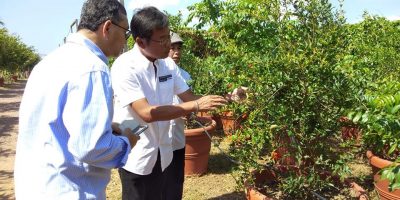
林伟荣(左2)向阿兹兰(左1)分享种植超级水果的心得。

玻璃市州务大臣拿督斯里阿兹兰欢迎游客到来参观被誉为东南亚最大及全马唯一的无花果种植园”超级水果谷”(Superfruit Valley)。

他说,游客可以在前往毗邻马泰边境的巴东勿刹时,途经朱宾路到”超级水果谷”。

他说,游客向来在巴东勿刹旅游时,都是逛边境的买卖市集而已,如今,他们的行程可再增加一个观光地点,体验大自然的农业旅游,也延长在玻州逗留的时间。
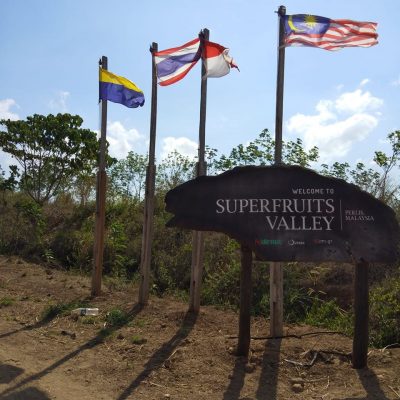

超级水果谷位于玻州朱宾。

他说,配合2021年玻州旅游年,玻州政府已把朱宾超级水果谷列为本地农业旅游的产品之一,并开始向外大力推广,以吸引国内外的游客慕名而来,借此增加玻州收入。

阿兹兰出席颁发证书给6名在朱宾超级水果谷完成6个月农业培训的实习生后,这么说。
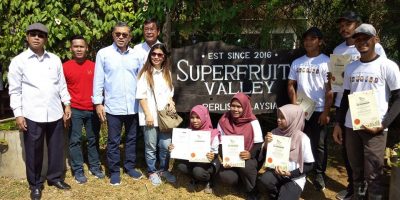

阿兹兰(左3)与6名在朱宾超级水果谷完成6个月农业培训的实习生合影。左4后者:林伟荣。

占地125英亩的朱宾超级水果谷,是由Fig Direct私人有限公司于2016年注资及开发。

该公司的执行董事林伟荣说,他向玻州政府申请后,获得批准建造一段长达约3公里的路段直通果园,如今已开放给大众自行驾车驶入果园参观。


果园内种植无花果、柠檬、桑果、巴西莓、石榴、木鱉果、百香果等,皆是高价值水果。

他说,果园内种植无花果、柠檬、桑果、巴西莓、石榴、木鱉果、百香果等,皆是高价值水果。

从入口处驾车驶入果园的一路上,一望无际的园地映入眼帘,让人们视觉上的放松,享受大自然的美景。

~光华日报~

2019年6月7日星期五

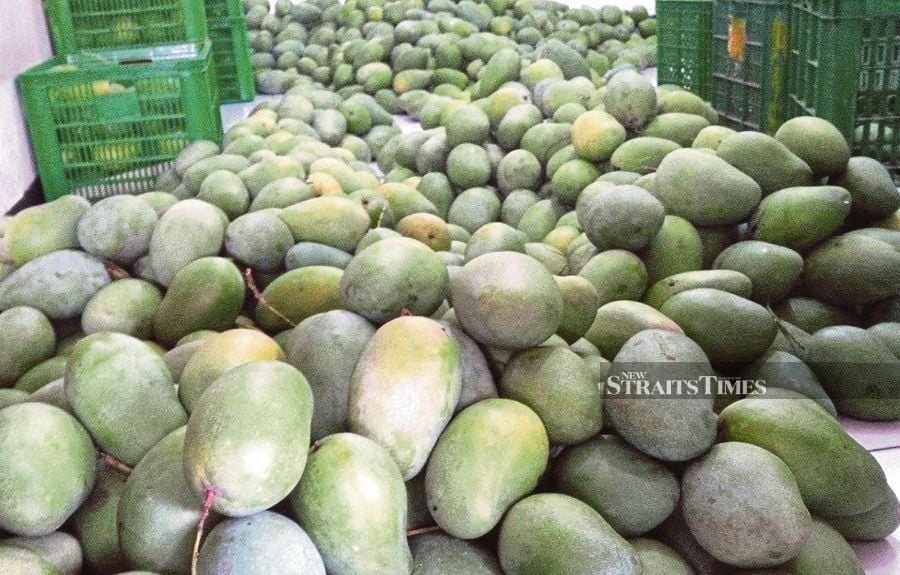
Harumanis' sweet returns

Harumanis' sweet returns


Harumanis farmers in Kedah are aiming to produce up to 75 tonnes of mangoes this season.

The handsome returns from the harumanis trees was what “attracted” a sizeable number of farmers in Kedah to grow the mango variant.

Kedah Federal Agricultural Marketing Authority (Fama) deputy director (Operations) Hasrol Nizam Muhammad Zuki said those who had been in the business for a long time would be able to attest to this.

Among them were harumanis farmers from Kampung Pida 3, Kodiang in the Kubang Pasu district.

Hasrol said a mature harumanis tree, usually more than 5 years old, would be able to produce an average of about 50kg of fruits a season.

The current season began early last month and is expected to last until early July.

“So, for a farmer who has five mature harumanis trees, and if he really takes good care them, he would be able to collect 250kg of the fruits for the season.

“If the price is RM20 per kg, then the farmer will get RM5,000 this season just from the five trees.

“The more the farmer grows, the more returns he gets.

“If a farmer has 100 mature harumanis trees, which would be able to produce 5,000kg fruits, he will earn RM100,000 for the season,” he told the New Straits Times.

Hasrol, however, said the majority of the farmers in Kedah were newcomers and might not have seen such promising returns yet.

This is when, he said, Fama, the Kedah state Agriculture Department, Kedah Malaysian Agricultural Research and Development Institute and Muda Agricultural Development Authority could come forward to help the farmers by providing them with the necessary guidance and technical expertise.

“However, this is not an easy task and it takes a lot strength and patience,” he added.

The New Sunday Times reported that contrary to popular belief that the harumanis could only be grown in Perlis, it was fast gaining the attention of the Kedah farmers.

Kedah Fama had registered 46 harumanis farmers, operating on 42.1ha, with a total of 3,742 trees. There were more than 90 harumanis farmers in Kedah.

Last season, the state produced between 17 and 18 tonnes of mangoes. This season, the figure is expected to rise significantly to between 70 and 75 tonnes.

Since the start of the season, Kedah has recorded sales of 2.5 tonnes of the fruit known as “king of mangoes”.

Sales are expected to soar after the fasting month and before the end of the season.

~New Straits Times~

2019年2月19日星期二

Rice harvesting in Yan 铅县稻田收割


Kampung Sungai Bujur, Sedaka, Yan,Kedah

Source credit to Tang Boon Kee

2018年11月12日星期一

Laksa

Laksa is a spicy noodle soup popular in Peranakan cuisine. Laksa consists of rice noodles or rice vermicelli with chicken, prawn or fish, served in spicy soup based on either rich and spicy curry coconut milk or on sour asam (tamarind or gelugur). Laksa is found in Malaysia, Singapore, Indonesia, and Southern Thailand.

The type of laksa is based upon the soup base employed in its recipe; either rich and savoury coconut milk, fresh and sour asam (tamarind, gelugur or kokum), or the combination of the two. 

There are three basic types of laksa: curry laksa, asam laksa, and other variant that can be identified as either curry or asam laksa. 

Curry laksa is a coconut milk curry soup with noodles, while asam laksa is a sour, most often tamarind-based, soup with noodles. Thick rice noodles also known as laksa noodles are most commonly used, although thin rice vermicelli (bee hoon or mee hoon) are also common, and some recipes might create their own rice noodle from scratch. Some variants might use other types of noodles; Johor laksa for example uses spaghetti, while a fusion recipe might use Japanese udon noodle.


Laksa lemak, also known as nyonya laksa (Malay: Laksa nyonya), is a type of laksa with a rich coconut gravy. Lemak is a culinary description in the Malay language which specifically refers to the presence of coconut milk which adds a distinctive richness to a dish. As the name implies, it is made with a rich, slightly sweet and strongly spiced coconut gravy. Laksa lemak is usually made with a fish-based gravy (with vegetarian food stalls omitting fish) and quite similar to Thai laksa (Malay: Laksa Thai), perhaps to the point that one could say they are one and the same.


Asam laksa is a sour, fish and tamarind-based soup. Penang Asam Laksa listed at number 26th on World's 50 most delicious foods compiled by CNN Go in 2011. Asam is the Malay word for any ingredients that makes a dish tastes sour (e.g. tamarind, gelugur or kokum). Laksa typically uses asam keping, known as kokum in the English speaking world, which is a type of dried slices of sour mangosteens. 

The modern Malay spelling is asam, though the spelling assam is still frequently used.
The main ingredients for asam laksa include shredded fish, normally kembung (small mackerel of the Rastrelliger genus), and finely sliced vegetables including cucumber, onions, red chillies, pineapple, lettuce, common mint, daun kesum (Vietnamese mint or laksa mint), and pink bunga kantan (torch ginger). Asam laksa is normally served with either thick rice noodles or thin rice noodles (vermicelli). And topped off with petis udang or "hae ko" (蝦膏), a thick sweet prawn/shrimp paste.


Source: Wikipedia and Facebook

2018年11月1日星期四

Kedah local food 吉打本地美食

`

Apam Balik

Apam balik (English: 'turnover pancake') or terang bulan (English: 'bright moon') or martabak manis (English: 'sweet martabak') common in Southeast Asia. It is usually sold at specialist roadside stalls throughout Brunei, Indonesia, Malaysia and Singapore.


The pancake's batter is made from a mixture of flour, eggs, sugar, baking soda, coconut milk and water. The batter is cooked upon a thick round iron frying pan in plenty of palm margarine to avoid it sticking to the pan. 

Then other ingredients are sprinkled as filling; the most common or traditional is crushed peanut granules with sugar and sweetcorn kernels (available from cans), but modern innovations such as chocolate sprinkles and cheddar cheese are also available. Then, the pancake is folded (hence the name: "turnover pancake") and cut into several pieces.

The texture of the apam balik can vary depending on the amount of batter and type of pan used, from one that is akin to a crispier form of crumpets to small thin light pancake shells that break when bitten (the latter is usually called apam balik nipis, 'thin apam balik').

The dish has been declared a heritage food by the Malaysian Department of National Heritage.

~wikipedia~

2015年2月6日星期五

今年或不外销‧来玻吃香甜芒嘍!

今年或不外销‧来玻吃香甜芒嘍!

玻璃市著名的香甜芒今年可能不外销,想要买、吃香甜芒,请到玻璃市!

玻璃市著名的香甜芒预计会推迟约2个星期,5月才能收成上市,不过今年或不会將香甜芒送到其他地方出售。

玻州行政议员阿末峇克里昨天(3日)到柏斯里甘榜巴耶哥鲁比,出席大马农业发展研究所(MARDI)推介照料香甜芒花蕊活动时说,儘管州政府还未获得香甜芒的专属產权,不过一提到这种水果,大家自然会想起玻璃市。

所以,他说,政府希望能在收成季节时,香甜芒只在玻州上架,吸引外地人前来抢购,有助於推动玻璃市的旅游业。

阿末峇克里:结花时避开雨水
芒果收成料比去年多

阿末峇克里说,由於近年来的天气变幻莫测,庆幸香甜芒果树结花时,遇到大热天气,避过被雨水打掉花蕊的问题,所以相信收成会比去年来得多。

他说,去年平均每公顷4.8公吨,今年预计每公顷可有5.3至5.5公吨收成,州內共有127公顷地段种植香甜芒,由157名果农栽种。

开花日子拖迟2週

不过,他说,今年开花日子拖迟了2个星期,所以结果也会从早年的4月中,拖迟至5月。

另一方面,阿末峇克里说,今年出口至其他国家的香甜芒,也得视收成数量及素质而定,而日本是確定会入口香甜芒的国家,去年有50吨,今年得確保素质达到该国的標准才会出口。

枝干可与香甜芒接枝
种“阳光”芒勿砍果树

种植“阳光”芒(Perlis Sunshine,又称Sala)的果农受促勿砍掉果树,阿末峇克里说,大马农业发展研究所已可协助果农,在“阳光”芒枝干进行与香甜芒的树苗接枝。

他说,这是加速香甜芒成长的其中一个方法,不必等上数年才盼到开花结果。

无论如何,当局也担心2种果树的接枝后,会生產与现有香甜芒不同的味道和素质。

玻马大採用温室培植

询及玻马大研发全年有香甜芒供应的计划,阿末峇克里说,玻马大是採用温室培植,並非同一棵树能全年產果,而是不同的温室里的香甜芒果树,在不同时期开花结果,就能確保全年有香甜芒。

不过,他解释,一个温室耗资28万令吉,並非每一个果农有能力建立,只是以这种方法培植,能把產量提高,减低售价。

(星洲日报‧大北马)

2011年4月30日星期六

玻璃市香甜“芒果王”叫卖

玻璃市香甜“芒果王”叫卖‧沙比里:须辨明特徵避免上当


沙比里:“玻璃市(Perlis)香甜芒正式推出市场,购买前先认明香甜芒的特徵。”他左手所拿的芒果,就是农业局贴好標籤的香甜芒,其右手所拿的则是“沙拉”芒,俗称“玻璃市阳光”(Perlis Sunshine)。(图:星洲日报)

(玻璃市‧加央)因气候关係,延后一个月面市,玻璃市著名的“芒果王”香甜芒(Harumanis)终於正式推出市场。

对於路边果摊早在一个月前,掛上图字並茂的“售卖香甜芒”布条,玻州农业及农基工业事务委员会主席沙比里先说明,今年的香甜芒因气候而延迟收成,因此那时候所谓的香甜芒,或是来自邻国的“假冒”香甜芒,果贩企图混水摸鱼。

为此,他特別呼吁大家在购买香甜芒之前,先认明其特徵,避免上当买到“假冒”香甜芒。

他昨天(4月29日)在“香甜芒乡镇”甘榜巴耶哥鲁比,出席“与媒体参观‘香甜芒重整计划’果园”活动时这么说。

在场者包括玻州农业局主任卡查里、大马农业研究发展局主任布克里、玻州园主发展机构主任沙依丹。

指示玻2局申请註册
列香甜芒为专属產权

沙比里说,由於香甜芒已成了玻璃市的“商標”,而且需求量颇高,为了避免不负责任的人士趁机牟利,或企图以“假冒”香甜芒混水摸鱼,因此州政府已指示州经济发展局及农业局申请註册,把香甜芒列为玻州的专属產权。

他说,玻州是香甜芒唯一的最佳种植地区,就连日本政府也指名,以玻州香甜芒做为大马出口至日本的水果种类首选,去年5月首次把500公斤香甜芒运入日本。

询及会否考虑製作其他香甜芒的相关產品,沙比里说,现阶段的香甜芒供不应求,所以暂时无法办到。

或供不应求
考虑“先到先得”销售

由於香甜芒產量或供不应求,卡查里说,由当局推销的香甜芒將不接受预定,考量“先到先得”的方式来销售。

他欢迎任何有兴趣购买香甜芒的人士,可先致电农业局武吉德敏办事处(04-9384466)或武吉宾当销售中心(04-9768901)询问。

5月4至6日推介
欢迎公眾选购农產品

玻州政府將联合农业局、联邦农粮销售局(FAMA)、大马农业研究发展局(MARDI)及农业银行於5月4至6日(星期三至星期五),早上10时至晚上10时,在加央(Kangar)拿督锡阿末广场举行推介礼。

届时,將会设有各类售卖摊格,包括香甜芒、芒果糯米、新鲜水果、玻州港口拉沙、白米、农基產品、农业银行贷款柜台、选民登记柜台、健康检查等,以及各种游戏和文化演出。

主办当局欢迎公眾到现场选购新鲜的香甜芒,以及玻州出產的各类农基產品。

如何识別香甜芒

■即使果实成熟,果皮依然呈较深的青色。
■比其他品种的芒果小。
■最大的果实“超级A”(Super A)品种的重量都不超过600公克。
■果身浑圆,尾段有些许往上勾起,如豆型。
■全国只有玻璃市大量出產香甜芒。
■收成季节介於4月至6月初。

香甜芒价格(级別)(每公斤)
超级A(Super A) 12令吉
A 9令吉
B 8令吉
C 7令吉

星洲日报/大北马‧2011.04.29
http://mykampung.sinchew.com.my/node/139850?tid=4